
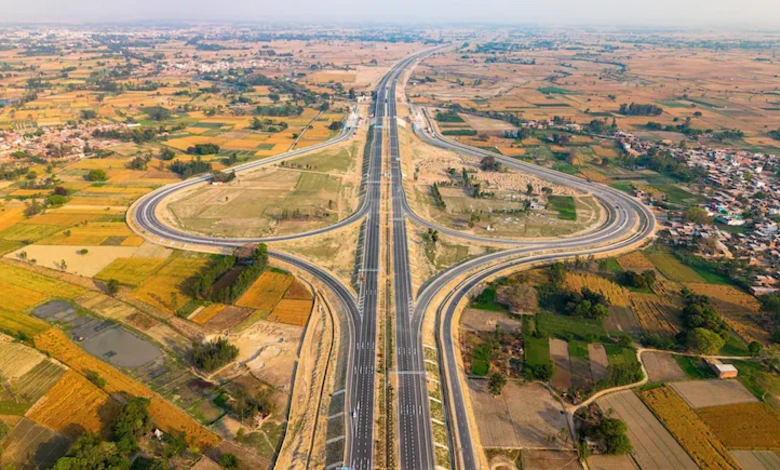
Prime Minister Narendra Modi inaugurated the 594-km Ganga Expressway on Wednesday in the presence of Uttar Pradesh Chief Minister Yogi Adityanath. The ambitious project, one of India’s largest greenfield highway initiatives, connects Meerut in western Uttar Pradesh to Prayagraj in the east, spanning 12 districts: Meerut, Hapur, Bulandshahr, Amroha, Sambhal, Budaun, Shahjahanpur, Hardoi, Unnao, Rae Bareli, Pratapgarh, and Prayagraj.
The six-lane access-controlled expressway, designed for a maximum speed of 120 kmph and expandable to eight lanes in the future, was constructed at an estimated cost of Rs 36,230 crore. It promises to slash travel time between Meerut and Prayagraj from the current 10-12 hours to approximately 6-8 hours, allowing motorists to cover the roughly 600-km stretch in about six hours under optimal conditions.
Conceived as a multi-purpose economic corridor, the Ganga Expressway integrates logistics parks, warehousing facilities, agro-processing units, and manufacturing zones. Twelve Integrated Manufacturing and Logistics Clusters (IMLCs) are planned along the route, with nearly 6,507 acres of land identified for development. Sector-specific industrial nodes will leverage local strengths in manufacturing, logistics, e-commerce, food processing, and warehousing.
ALSO READ : Deadly Highway Crash In Bihar Leaves 13 Dead, Dozens Injured



The project also holds strategic importance, featuring a 3.5-km airstrip in Shahjahanpur capable of handling emergency landings by fighter aircraft. It forms part of a broader expressway network, linking with the Yamuna Expressway, Agra-Lucknow Expressway, the Jewar Link, and routes toward Noida International Airport, with potential future extension toward Haridwar. Built as an all-weather corridor, it aims to promote balanced regional growth by bridging the industrially advanced western parts of the state with the agriculture-focused eastern regions.
Authorities have received nearly 987 investment proposals worth around Rs 47,000 crore for the clusters along the expressway. The infrastructure is expected to lower logistics and freight costs significantly, reduce inventory carrying expenses by 15-20 percent, shorten transport routes for heavy goods by 40-50 percent, and stimulate demand for warehousing. Sectors such as FMCG, textiles, furniture, appliances, and e-commerce stand to benefit, alongside boosted agricultural marketing and tourism, particularly around sites like Prayagraj’s Triveni Sangam and Garhmukteshwar.
The Ganga Expressway, Uttar Pradesh’s longest expressway, is positioned as a catalyst for industrialisation, urbanisation, and real estate development across the connected districts. It underscores efforts to transform the state’s economy through enhanced connectivity and infrastructure-led growth.