
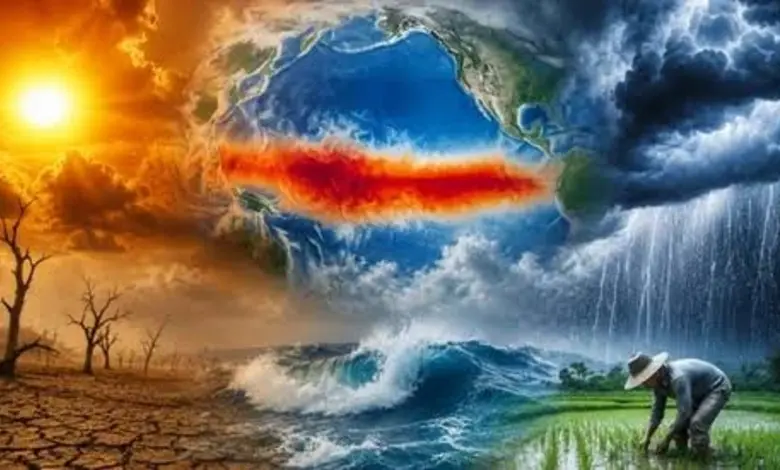
Scientists tracking conditions in the tropical Pacific Ocean report that the current El Nino is on course to become the most intense event experienced by people alive today. Projections indicate it may reach peak strength around November and December.
Sea surface temperatures across the equatorial Pacific have already entered “Super El Nino” territory. Of greater concern to researchers is the large reservoir of heat still stored beneath the ocean surface, which is expected to rise in the coming months.
Current measurements show that subsurface heat content in the tropical Pacific already exceeds the levels recorded during the major El Niño episodes of 1982-83, 1997-98 and 2015-16. These three events rank among the strongest in modern climate records.
Climate analysts note that the present event is setting new marks across several indicators, including the speed of ocean warming, expected peak intensity and the total volume of heat stored in the upper ocean layers.



El Niño develops when unusually warm water spreads across the central and eastern Pacific. This alters atmospheric circulation patterns and can influence rainfall, droughts, floods, heatwaves and tropical cyclone activity on multiple continents.
Experts expect the phenomenon to continue strengthening through the remainder of the year. If forecasts prove accurate, it could surpass previous benchmark events by a notable margin.
When combined with long-term human-driven climate change, the powerful El Niño could temporarily push global average temperatures close to 2 degrees Celsius above pre-industrial levels during early 2027. Such conditions would place the planet in a climatic state not observed for hundreds of thousands of years.
Meteorologists caution that the following 12 to 18 months are likely to bring a rise in extreme weather events worldwide. These may include more intense heatwaves, shifts in monsoon patterns, severe droughts in some regions and increased flood risks in others.
While precise regional effects remain uncertain, the broader outlook points to a period of heightened climate volatility. With ocean temperatures still rising and substantial subsurface heat yet to emerge, the months ahead are expected to test the global climate system more dramatically than any previous recorded episode.