
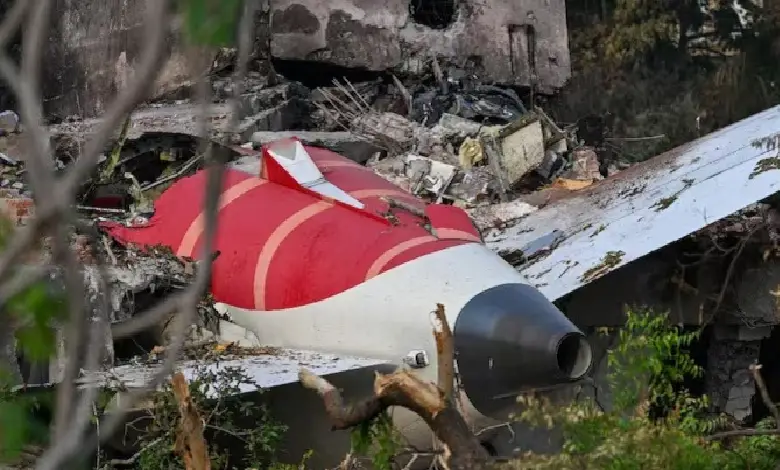
Ahmedabad : One year after the tragic Air India Boeing 787-8 Dreamliner crash in Ahmedabad, the Federation of Indian Pilots (FIP) has urged the Aircraft Accident Investigation Bureau (AAIB) to conduct targeted simulator tests on the aircraft type. The request aims to independently verify specific technical aspects related to the sequence of events leading to the accident.
The aircraft, operating as flight AI-171 with registration VT-ANB and bound for London Gatwick, crashed shortly after takeoff from Ahmedabad on June 12, 2025. The incident occurred during the initial climb phase, resulting in the deaths of 241 people on board and 19 individuals on the ground. A single passenger survived, while all 12 crew members perished. Victims included citizens from India, the United Kingdom, Portugal, and Canada.
In a formal letter sent to the AAIB on June 14, 2026, the FIP highlighted the need for comprehensive Boeing 787 simulator sessions. These tests would include an observer nominated by the pilots’ body to examine the relationship between Ram Air Turbine (RAT) deployment, hydraulic power generation, and any movement of the fuel control switches. The group also seeks confirmation of the acceleration data noted in the AAIB’s preliminary report.
The RAT is an emergency system that deploys automatically during dual engine failure or complete loss of electrical and hydraulic power. It harnesses wind energy to provide essential backup electricity to the aircraft.




Drawing on a communication from a law firm representing affected passengers and families, the FIP suggested that RAT activation may not have been directly linked to changes in the fuel system immediately preceding the crash. The pilots’ organization recommended correlating survivor accounts such as reports of a loud bang and dimming cabin lights—with ACARS maintenance messages sent between 0753 and 0808 UTC, along with visible damage documented in the aft Enhanced Airborne Flight Recorder (EAFR) image from the preliminary report.
ALSO READ: Air India Plane Crash : Pilots’ Union Says Preliminary Report Biased Towards Pilot Error
FIP emphasized that these elements should be analyzed collectively against recorded flight data to build a clear timeline of events. Investigators would also assess whether electrical system irregularities or software issues may have played a role in the accident. Findings from the proposed simulator tests should inform the final investigation report, according to the letter.
This appeal follows the AAIB’s interim statement issued on June 12, 2026, which noted substantial advancements in the ongoing inquiry. The preliminary report into the crash was released on July 12, 2025.
The demand underscores the aviation community’s focus on thorough technical validation as the probe moves toward completion, ensuring all potential contributing factors receive detailed scrutiny.