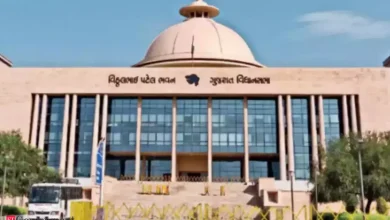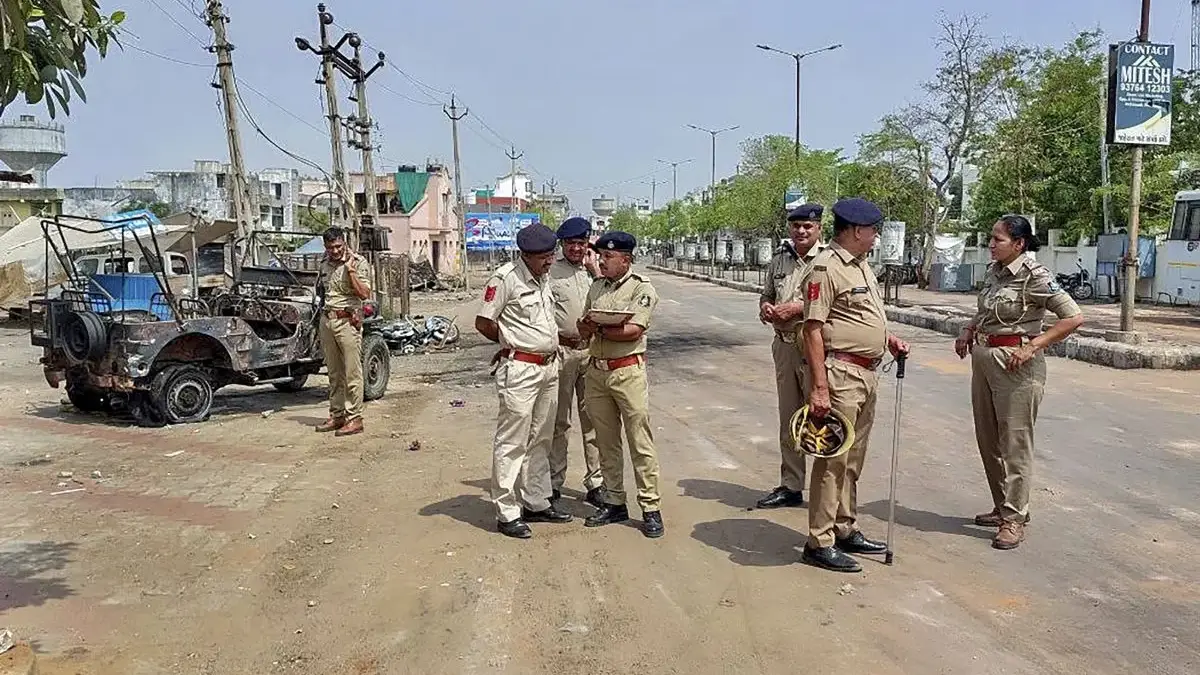
Ahmedabad: The Gujarat High Court has struck down the Ahmedabad Police Commissioner’s notification implementing Section 144. Section 144 of the CrPC (Criminal Procedure Code) is used to prevent unlawful assembly of people. According to the Gujarat High Court, this provision appears to be used “arbitrarily,” resulting in “violation of people’s fundamental rights.”
When protests took place in Gujarat in 2019 against the Citizenship Amendment Act (CAA), FIRs were filed against several citizens who participated. Those affected approached the Gujarat High Court against these actions.
According to an Indian Express, the High Court has directed the state government to exercise sufficient caution while implementing Section 144 notifications in the future. The court instructed police to ensure adequate publicity through social media to create awareness among people.
Who Welcomed the High Court’s Verdict?
Social activist Mujahid Nafis, who works for minority rights, has also welcomed the Gujarat High Court’s decision.
Speaking to BBC, he said, “Section 144 should only be used in critical situations. In Gujarat, the government has been continuously attempting to impose its authoritarianism with police assistance. Due to this, Section 144 remains in force for more than 300 out of 365 days not just in Ahmedabad, but in every city across the state. In Anand, a permanent Section 144 was imposed within a one-kilometer radius of the Collector’s office.”
He added, “The government has been creating a curfew-like atmosphere in cities by imposing Section 144 to suppress public outrage and voice, ensuring no one can protest for their demands.”
Mujahid Nafis stated, “When we requested permission to hold protests against NRC, we were denied citing only Section 144. Now the High Court has honored public sentiment, enabling people to voice their concerns.”
Retired IPS officer R.P. Priyadarshi has welcomed this High Court verdict. Speaking with BBC, he said, “This verdict is appropriate. Typically, police chiefs impose Section 144 for 14 days, then lift it for half a day before reimposing it. Police have other means available to prevent unlawful assembly. So why is this notification necessary?”
When CAA and NRC protests erupted across Gujarat, a debate had already begun regarding the implementation of Section 144.
On one hand, people believe this provision violates their fundamental rights. On the other, the government favors its implementation.
According to a 2019 petition in Gujarat High Court, judicial magistrates or police chiefs lack authority to keep this provision continuously in force, as it is unconstitutional and violates freedom of expression and right to assembly.
This petition was filed by IIM Ahmedabad Professor Navdeep Mathur along with other intellectuals.
What is Section 144?
Generally, notifications under Section 144 are issued for 15-day periods, and police chiefs reissue them every 15 days as per the authority granted under the Criminal Procedure Code (CrPC) and Gujarat Police Act.
According to the Gujarat Police Act and Criminal Procedure Code (CrPC), police chiefs or judicial magistrates have authority to prevent four or more people from gathering at public places.
They can also impose restrictions on the use of banners, posters, or loudspeakers.
However, people can conduct any procession, meeting, or public demonstration only after obtaining permission from the police chief.
Discussing Section 144, constitutional law expert advocate Gautam Bhatia told BBC, “This provision was implemented during British rule in 1898 to prevent people from gathering for the freedom struggle and protesting against the government.”
Read More:
“But this provision remained intact even after independence.”
Bhatia further stated that amendments were made to the CrPC in the 1960s, but no changes were made to Section 144. Therefore, this provision has existed since 1898 until now.
-

-
-

-