
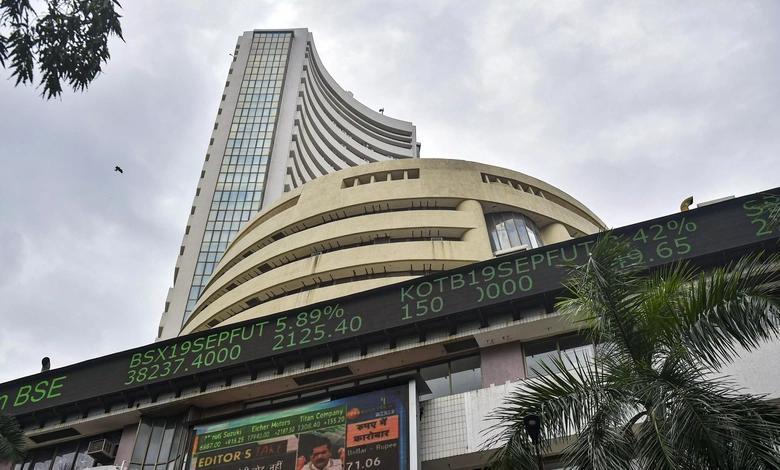
Indian equity benchmarks continued their decline on Tuesday, with both the Sensex and Nifty50 falling more than 0.8 per cent amid cautious investor mood.
Around mid-morning, the Nifty50 was trading at 22,586.60, down 194 points or 0.85 per cent. The Sensex stood at 72,138.99, lower by 633 points or 0.87 per cent. The early fall wiped out nearly ₹4 lakh crore from the combined market capitalisation of BSE-listed companies, bringing the total to around ₹474 lakh crore. Bajaj Finance was among the sharper decliners on the Sensex, while the midcap and smallcap indices also slipped close to 0.8 per cent each.
The domestic weakness mirrored broader pressure across global markets. US stocks had closed lower the previous session, with the Nasdaq falling more than 0.9 per cent and the S&P 500 down around 0.8 per cent. Asian indices were similarly subdued, with Japan’s Nikkei dropping over 1 per cent and markets in Hong Kong and South Korea also posting near 1 per cent declines.
Several factors contributed to the selling pressure. Developments in the Middle East kept investors on edge after the US President denied reports of offering Iran sanctions relief and access to frozen funds in exchange for nuclear-related concessions. Separate talks with mediators continued in efforts to end the ongoing conflict. Crude oil prices rose in response, with Brent futures climbing above $107 a barrel and WTI moving past $94 a barrel.




Bond yields touched fresh multi-year highs, making fixed-income assets relatively more attractive and adding pressure on equities. The Indian rupee weakened past the 96-per-dollar mark to a two-month low of 96.1450 against the US dollar, reflecting concerns over the impact of higher oil prices on the energy-importing economy.
Foreign institutional investors remained net sellers, offloading shares worth more than ₹5,353 crore on Monday. Month-to-date equity outflows through the exchanges have reached ₹25,682 crore, with foreign investors turning net sellers in 15 of the 19 trading sessions so far this month.
Tuesday’s session also coincides with the monthly expiry of Nifty futures and options contracts, a period that typically heightens volatility. Markets are additionally factoring in the possibility of a rate hike by the Reserve Bank of India at its Monetary Policy Committee meeting scheduled for early October, following the US Federal Reserve’s recent increase.
Overall, a combination of geopolitical uncertainty, rising commodity and bond yields, currency pressure and persistent foreign selling kept risk appetite subdued across Indian equities.