
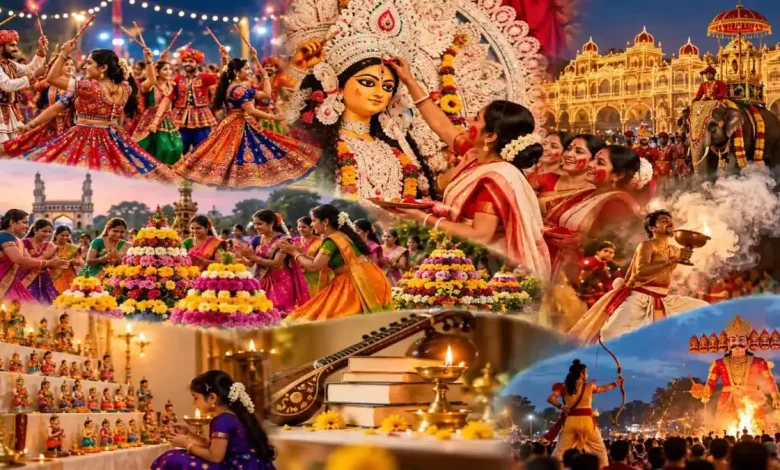
From swirling chaniya cholis and rhythmic dandiya sticks to grand Durga Puja pandals and clouds of incense, Navratri brings India together through traditions as diverse as its people.
Mumbai: As the nine nights of Navratri unfold, India transforms into a vibrant celebration of faith, music, dance and devotion. While Gujarat lights up with energetic Garba performances, West Bengal welcomes Goddess Durga with magnificent pandals and the mesmerising Dhunuchi dance. Across the country, communities follow their own customs, united by devotion to the divine feminine and the enduring message of good triumphing over evil.
Navratri, meaning “nine nights”, is dedicated to the worship of Goddess Durga and her nine forms. Although celebrations vary by region, the festival reflects India’s remarkable cultural diversity.
In Gujarat, Garba takes centre stage. Men and women dressed in colourful traditional outfits dance in circles to devotional songs and pounding dhol beats. Dandiya Raas, performed with decorated wooden sticks, adds to the festive excitement. From neighbourhood gatherings to massive dance events, the tradition blends worship with community celebration.


In West Bengal, the festival is synonymous with Durga Puja. Elaborately decorated pandals house artistic idols of Goddess Durga, often depicting her victory over Mahishasura. Crowds visit these temporary shrines, enjoy cultural programmes and participate in rituals. One of the most striking sights is the Dhunuchi dance, in which devotees dance while holding earthen incense burners filled with burning coconut husk and fragrant incense. The swirling smoke, rhythmic drumbeats and energetic movements create an unforgettable spectacle. On Vijayadashami, married women traditionally participate in Sindoor Khela, applying vermilion to the goddess and one another before the idols are immersed.
In Maharashtra, Navratri combines fasting, devotional music, Garba and Dandiya nights. Many households also worship the goddess through traditional rituals. In North India, devotees observe fasts, visit temples and organise Ramlila performances, culminating in Dussehra celebrations that symbolise the victory of good over evil.
In South India, particularly Tamil Nadu, families arrange Golu displays featuring dolls depicting deities, mythological stories and everyday life. Karnataka also celebrates Mysuru Dasara with its celebrated royal traditions, while Telangana welcomes the season with Bathukamma, a floral festival in which women arrange flowers into colourful, tiered displays and gather to sing and dance.
In Andhra Pradesh, devotees visit temples and participate in special Navratri worship, while Himachal Pradesh continues the festivities through Kullu Dussehra after Vijayadashami. In parts of eastern India, including Odisha, Durga Puja is marked by elaborate worship, community gatherings and cultural performances.
From Gujarat’s dancing circles to Bengal’s incense filled celebrations and southern India’s colourful Golu arrangements, Navratri takes many forms. Yet its central message remains the same faith, togetherness and the triumph of good over evil.
ALSO READ: Navratri 2026: From Traditional Chaniya Cholis To Modern Mirror Work Glam