
Flash Floods Claim Nearly 160 Lives in Nepal as Rescuers Hunt for Hundreds Missing
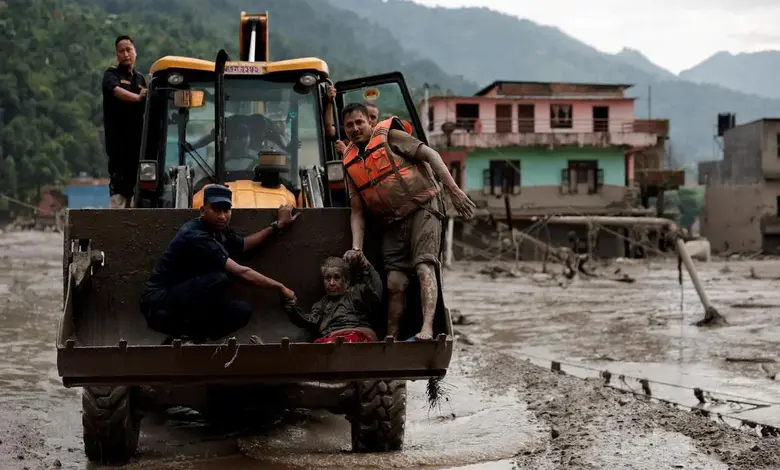
Nearly 160 people have been confirmed dead and more than 750 remain missing after a powerful flash flood tore through central Nepal on Wednesday. The disaster, which began near the border with Tibet, swept away villages, critical bridges and several hydropower installations along the Bhotekoshi and Trishuli river corridors.
Authorities reported that the flood was triggered by a glacial collapse that generated seismic activity and a massive debris flow. The resulting wall of water and rock raced downstream, devastating mountain towns and valleys popular with trekkers and pilgrims. Among the missing are 133 Indian nationals, while overall figures show 468 tourists and travellers 393 of them foreigners still out of contact.
Rescue teams continued searching for survivors on Thursday as the death toll climbed. Verified footage captured torrents of mud and debris carrying people and structures away. At least 13 hydropower projects suffered extensive damage, disrupting power supply in the affected region.
ALSO READ : Nepal Floods Explained : How Avalanche Could Have Triggered the Deadly Surge




The Indian government is closely monitoring the situation amid concerns that rising water levels could impact border areas in Bihar and Uttar Pradesh. Prime Minister Narendra Modi spoke with his Nepali counterpart and offered all possible humanitarian assistance. Several Indian states, including Tamil Nadu, Karnataka and Kerala, have set up dedicated helplines to assist stranded citizens and their families. The Embassy of India in Kathmandu has also released emergency contact numbers for those seeking help.
Australia reported that information on 34 of its missing citizens remains limited. In Sikkim, a group representing local communities has called for a review of new hydropower projects in the Himalayas, citing the Nepal disaster as a warning.
Officials continue to stress that the full scale of the destruction may take days to assess as search operations intensify in the remote and rugged terrain.