
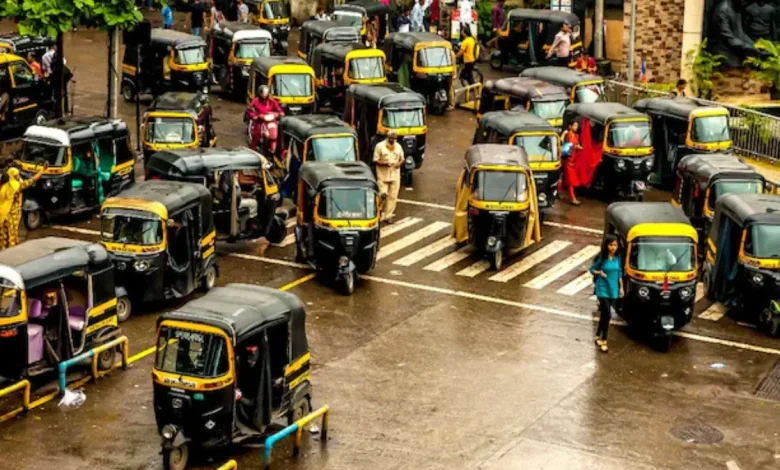
Mumbai : For decades, Mumbai’s iconic kaali-peeli taxis and autorickshaws have given the city its daily rhythm and enabled the superfast pace the city boasts about. Not just during peak office hours, cabs and autorickshaws are also a crucial part of the city’s late-night ecosystem. The nakas are everywhere, from south Mumbai to the northern suburbs.
Drivers who fail to speak in Marathi are being issued a “memo”, and if they fail again after a month, their registration as cab or autorickshaw drivers could be cancelled for three months, until they can pick up a few basic sentences in Marathi. Basic sentences in Marathi shouldn’t be much of a problem. But drivers allege that the questions they are being asked by the officials are “out of syllabus”.
A section of autorickshaw drivers in Mumbai began a three-day strike on Monday evening against Maharashtra’s new Marathi language requirement for commercial passenger vehicle drivers. Mumbai had already been facing a shortage of autos since Friday, when the drive began. Several commuters told India Today Digital that they had to wait 40-50 minutes to find an auto or cab, with many reaching work late.
The requirement applies to taxi and autorickshaw drivers, including those working with app-based cab services such as Ola and Uber. The Maharashtra government amended the Maharashtra Motor Vehicles Rules, 1989, to make working knowledge of Marathi mandatory for commercial passenger vehicle drivers. The enforcement drive began on August 20, after a three-month grace period ended on August 15.


Maharashtra Chief Minister Devendra Fadnavis said on Monday, “We are not trying to make our Hindi-speaking brothers experts in the Marathi language, but they should have working knowledge of the language… The deadline to learn the language has been extended three times now. Our Mahayuti government will not allow injustice based on language.”
He said, “Training and certification centres were operating in parts of Mumbai, including Marol Naka, Kanjur Marg, Kurla, Andheri and Goregaon. But the material taught there did not adequately prepare drivers for some of the questions they were facing during RTO checks.” Yadav said this was particularly difficult for older drivers, many of whom have limited education and depend on driving for their livelihood.
The pressure is also greater for drivers who work on short-term contracts. Yadav told India Today Digital, “Many autorickshaw drivers do not own their vehicles. Instead, they work under contractors who own several autos or cabs and pay drivers a share of their daily earnings.”For such drivers, Yadav said, “Learning another language while meeting daily income targets is very difficult.
Read Also : US Planning Major Hike For H-1B Visas, Indians To Be Affected