
How Iran Likely Took Down ‘Unkillable’ American Fighter Jet, Why ‘F35 Hit By Iran’ Is A Big Deal For World’s Most-Advanced
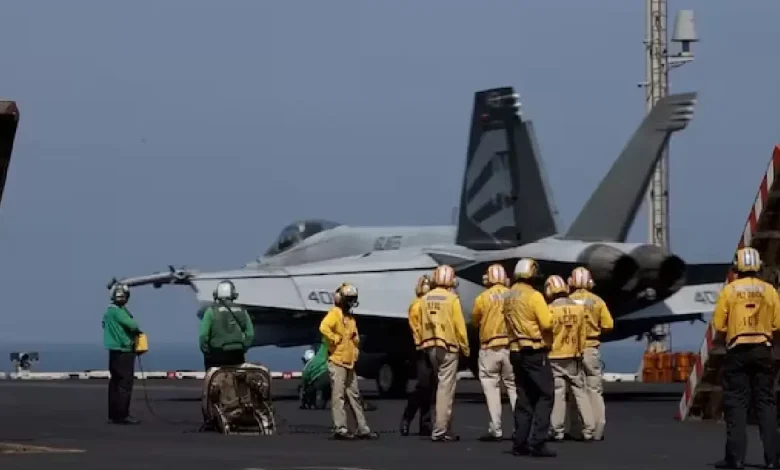
Tehran : Until March 19, when Iran did the unthinkable. Iran’s air defences, which US President Donald Trump said were destroyed, detected, locked on to, and hit an F-35. The US said the jet made an emergency landing at a base in the Middle East, even though Iran claimed it crashed. A second F-35 jet was also reportedly hit over Iran’s Bandar Abbas. It raises a pertinent question. How did Iran, with its depleted air defences, manage to hit one of the world’s most advanced and costliest aircraft?
That the US F-35 was flying over central Iran when it was struck indicates a degree of confidence within America’s security circles that Iranian air defences have been sufficiently weakened. “We’re flying wherever we want. Nobody is even shooting at us,” Trump boasted on Thursday. Defence Secretary Pete Hegseth further said Iran’s air defences have been “flattened”. Hours later, the F-35 jet, which has been designed to evade radar, was hit.
Around 15 countries currently operate various versions of the F-35. The jet was also offered to India by Trump when Prime Minister Narendra Modi visited the White House last year. India has, however, not expressed any inclination so far. Factor this – the F-35 is the acme of US aerospace capabilities. It is the product of a trillion-dollar program. But now, a “decimated” Iran has shown that the state-of-the-art jet has certain vulnerabilities.
Company brochures may claim it is totally invisible to radar. But there are other ways to get detected. One of them is through heat. It is exactly what happened on Thursday,” Unnithan told IndiaToday.in. While it is not known what missiles the Iranians used, it was a loitering munition, specifically the 358 anti-aircraft missile, or a short-range surface-to-air missile. The 358 missile, also known as the SA-67, is a kind of loitering drone equipped with an infrared sensor that can target slow-moving aircraft.




So what happened on March 19? Unnithan hypothesised that the missile homed in on the F-35 using an infrared search and track (IRST) system after detecting the jet’s heat signature. This is itself very significant. It points to the fact that while the F-35 is radar invisible, it is vulnerable to the infrared spectrum. Engines of such advanced aircraft produce a lot of heat. After all, the F-35 is a single-engine aircraft that generates an enormous amount of heat.
“One of the most sanctioned countries on Earth was able to detect, lock on to, and hit an F-35. I don’t think most people understand that the world has just changed,” tweeted a geopolitical expert who goes by the name Adam on X. Parallels of Thursday’s incident can be drawn to the 1999 shooting down of the US’s stealth F-117 Nighthawk. The attack aircraft, then the most-advanced in the world, was introduced in the early 1990s, and it also participated in the first Gulf War in 1991.
Read Also : Iran Executes 19-Year-Old Int’l Wrestling Star Saleh Mohammadi, Sparks Fear For Other Athletes