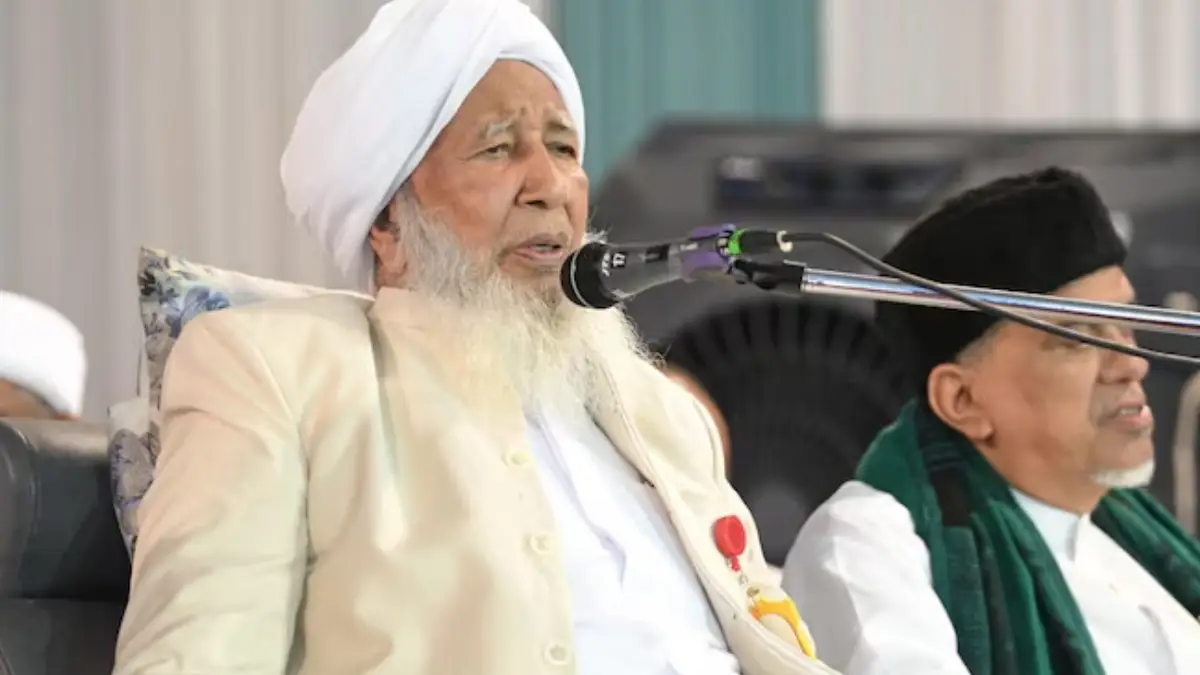
Kochi : Islamic cleric and Grand Mufti of India, Kanthapuram AP Aboobacker Musliyar, has sought to clarify his controversial remarks on women’s participation in public life. Kanthapuram said it was unfair to claim that women were given a subordinate position under Islam, stressing that Islamic teachings do not advocate suppressing or “burying” women.
The cleric further pointed to educational institutions run by the faction of the Samastha Kerala Jem-iyyathul Ulama led by him, including institutions exclusively for women, as evidence of the opportunities being provided to them. “It is not fair to say that we gave women second place in society,” he said, adding that there were schools in certain regions where only girls studied and women worked as teachers. “In many parts of India, I have created separate institutions for male and female and have been providing all necessities for free,” he said.
The clarification comes after a massive controversy erupted over his earlier remarks that bringing women into public spaces “causes great destruction” and that Islam had therefore mandated purdah for women. He had further claimed that the Quran states that women should remain confined to their homes and should not make public appearances. The remarks triggered widespread criticism from women’s organisations, ministers, intellectuals and political leaders from both the ruling front and the Opposition, as well as sections of civil society.
Kanthapuram has now stressed that Islam is not regressive towards women. He also pointed out that around 500 girls were studying and teaching at one of the institutions supported by him, adding that orphaned girls were also being provided care and educational opportunities. The row escalated further on Thursday after Kerala Chief Minister VD Satheesan strongly rejected Kanthapuram’s views, saying neither the government nor the Congress supported the cleric’s position.
At a press briefing, Satheesan dismissed Kanthapuram’s remarks as being contrary to both the history of women in Islam and the values of modern society and Kerala. Referring to Islamic history, Satheesan cited the examples of Khadija, the first wife of Prophet Muhammad, and Aisha, another wife of the Prophet, to argue that women had played prominent roles in public life. “Khadija, the Prophet’s first wife, was a major businesswoman.
Read Also : Torn Kurtas And Heated Slogans: AAP-BJP Fight Over MCD Panel Election Gets Ugly
-

-
-

-