
Trump Slashes Tariffs To 18% As Modi Commits To Halting Russian Oil Purchases
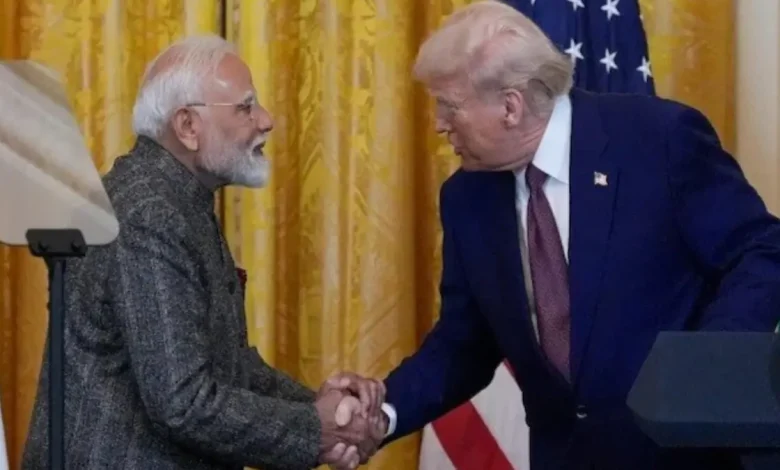
President Donald Trump announced a significant trade breakthrough with India on February 2, 2026, following a telephone conversation with Prime Minister Narendra Modi. The agreement eases longstanding trade friction by reducing U.S. tariffs on Indian exports, while tying the relief to New Delhi’s pledge to cease imports of Russian crude oil.
Trump disclosed the deal via social media, stating that the U.S. would lower its levy on Indian goods from 25% to 18% with immediate effect. He also confirmed the removal of an additional 25% punitive tariff imposed earlier in response to India’s continued purchases of Russian oil. This effectively rolls back a combined rate that had reached 50% on many Indian products, providing substantial relief to sectors such as textiles, leather, footwear, and jewelry, which have faced sharp export declines.
In exchange, Trump reported that India agreed to progressively eliminate its tariffs and non-tariff barriers on U.S. goods, aiming for zero levels, and to procure more than $500 billion worth of American energy, technology, agricultural products, coal, and other items over time. He further linked the arrangement to Modi’s commitment to stop buying Russian oil, a step intended to reduce Moscow’s revenues amid its ongoing conflict in Ukraine. Trump suggested that India would shift toward sourcing from alternatives, including the United States and Venezuela.
Modi acknowledged the pact on social media, confirming that “Made in India” products would now benefit from the reduced 18% U.S. tariff. He did not elaborate on the oil import shift or agricultural purchases, which remain sensitive issues domestically.




The deal follows months of strained negotiations, exacerbated by earlier U.S. penalties aimed at curbing India’s role as a major buyer of discounted Russian crude since Moscow’s 2022 invasion of Ukraine. U.S. Trade Representative Jamieson Greer had previously noted progress in limiting those purchases but indicated more remained to be done.
Market reactions were positive: India’s Nifty 50 futures rose sharply in early trading, the rupee strengthened against the dollar, and U.S.-listed India-focused ETFs gained ground.
Analysts view the accord as a potential boost for India’s manufacturing competitiveness as an alternative to China, though implementation challenges persist, particularly around agricultural imports and the precise pace of reducing Russian oil dependency. The agreement de-escalates bilateral tensions and signals a thaw in relations, building on recent diplomatic outreach.