
Trump Escalates Global Tariffs To 15% In Defiance Of Supreme Court Setback
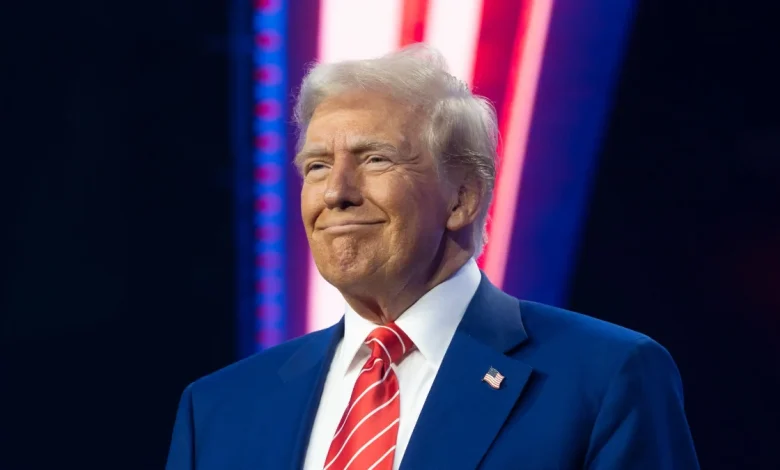
President Donald Trump announced on Saturday, February 21, 2026, that he is increasing a proposed global tariff on imports to 15%, up from the 10% rate he declared just a day earlier. The adjustment follows a major U.S. Supreme Court ruling that invalidated many of his previous sweeping tariffs.
In a social media post, Mr. Trump attributed the hike to his examination of what he called the “ridiculous, poorly written, and extraordinarily anti-American decision” issued by the Supreme Court the previous day. The court had determined that the President lacked authority under the International Emergency Economic Powers Act (IEEPA) of 1977 to impose broad tariffs during peacetime, as such powers belong to Congress under the Constitution.
The Supreme Court’s 6-3 decision, written by Chief Justice John Roberts, struck down tariffs Mr. Trump had enacted on imports from numerous countries, ruling that his invocation of emergency powers exceeded executive limits. The justices emphasized that the Constitution assigns the power to lay taxes, duties, and imposts exclusively to Congress.
In response, on Friday night, February 20, 2026, Mr. Trump signed an executive order invoking Section 122 of the Trade Act of 1974 to impose a temporary 10% ad valorem surcharge on imports worldwide. This measure, set to take effect shortly thereafter for up to 150 days, allows the President to act without immediate congressional approval, though extensions would require legislative consent.



The new 15% rate represents the maximum permissible under Section 122. Mr. Trump has maintained that other tariffs—such as those under Section 232 for national security reasons (e.g., on steel and aluminum) and Section 301 for unfair trade practices—remain unaffected and in force.
The Supreme Court ruling stemmed from challenges by businesses and others, affirming lower court findings that IEEPA does not grant the President unbounded authority to impose or modify tariffs at will. The decision has significant implications for global trade, though it does not impact sector-specific duties.
Mr. Trump’s swift pivot to alternative legal authority underscores ongoing tensions between executive trade actions and congressional oversight. Trading partners, including India, have noted the developments, with some sectors continuing to face existing levies despite the court’s intervention on the broader emergency-based tariffs.