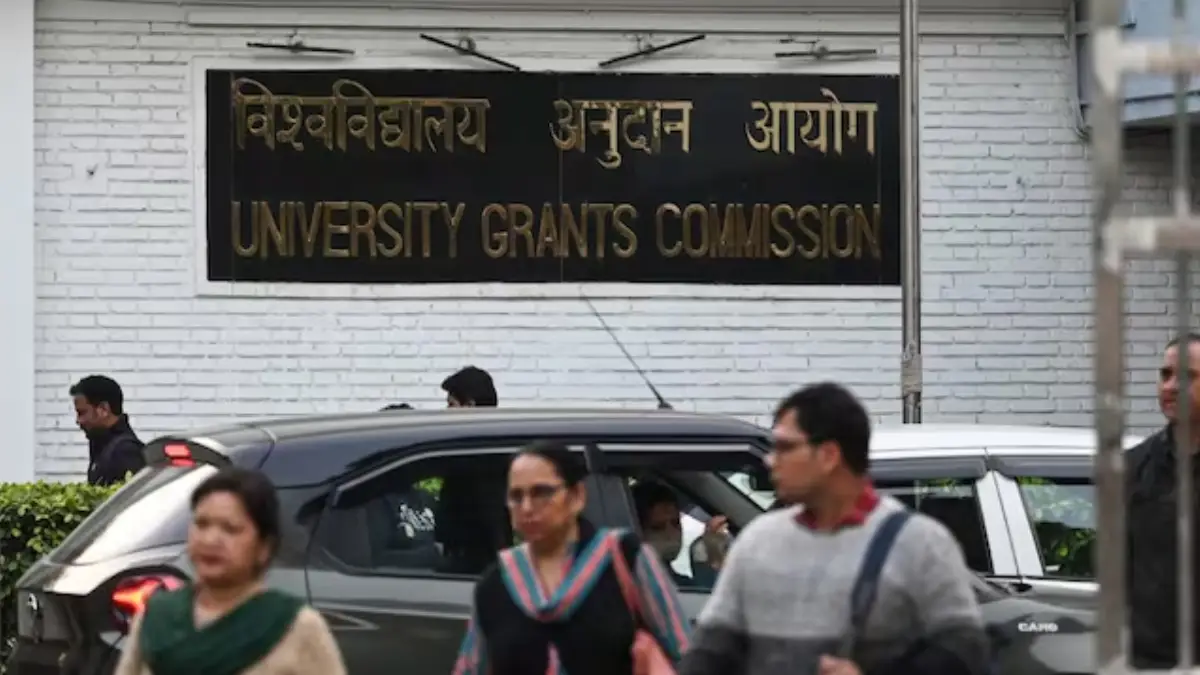
New Delhi : The SC (Supreme Court) on Thursday paused the implementation of the University Grants Commission’s (UGC) new anti-discrimination rules, citing concerns over their vague provisions and potential misuse. Taking note of the non-inclusive definition of caste-based discrimination and excluding certain categories from protection, the court issued a notice to the government and the UGC. The UGC notified the new regulations earlier this month, making it mandatory for all higher education institutions to constitute equity committees to look into complaints of discrimination and to promote inclusion.
The rules require the committees to include members from the Other Backwards Classes, Scheduled Castes, Scheduled Tribes, persons with disabilities and women. The rules exclude general category students from complaining under its grievance redressal mechanism and for this reason, the rules have been legally challenged and have triggered protests by students in several states, with critics alleging the rules could be misused. A bench of Chief Justice Surya Kant and Joymalya Bagchi noted that intervention in the matter was necessary because the guidelines were “capable of dividing society” and could have a “grave impact”.
“If we don’t intervene it will lead to a dangerous impact, will divide society and will have a grave impact,” the Chief Justice said, adding, “Prima facie we say that the language of the regulation is vague and experts need to look into for the language be modulated so that it is not exploited”. Petitioners argued that the regulations are exclusionary, denying institutional protection to those outside the SC, ST, or OBC categories. Counsel for the petitioners argued that such a selective framework encourages hostility against non-reserved categories, rendering the regulations a tool for division rather than equity.
Senior advocate Indira Jaising, appearing for the petitioners seeking stronger regulations to curb caste-based discrimination, countered the concerns raised. She argued that the plea was firmly rooted in the constitutional vision of equality and the need for an inclusive society. The UGC framed these regulations following a 2019 Public Interest Litigation (PIL) in the Supreme Court filed by Radhika Vemula and Abeda Salim Tadvi, the mothers of Rohit Vemula and Payal Tadvi, respectively.
Read Also : Maharashtra Deputy CM Ajit Pawar Cremated With Full State Honours In Baramati
-

-

-

-