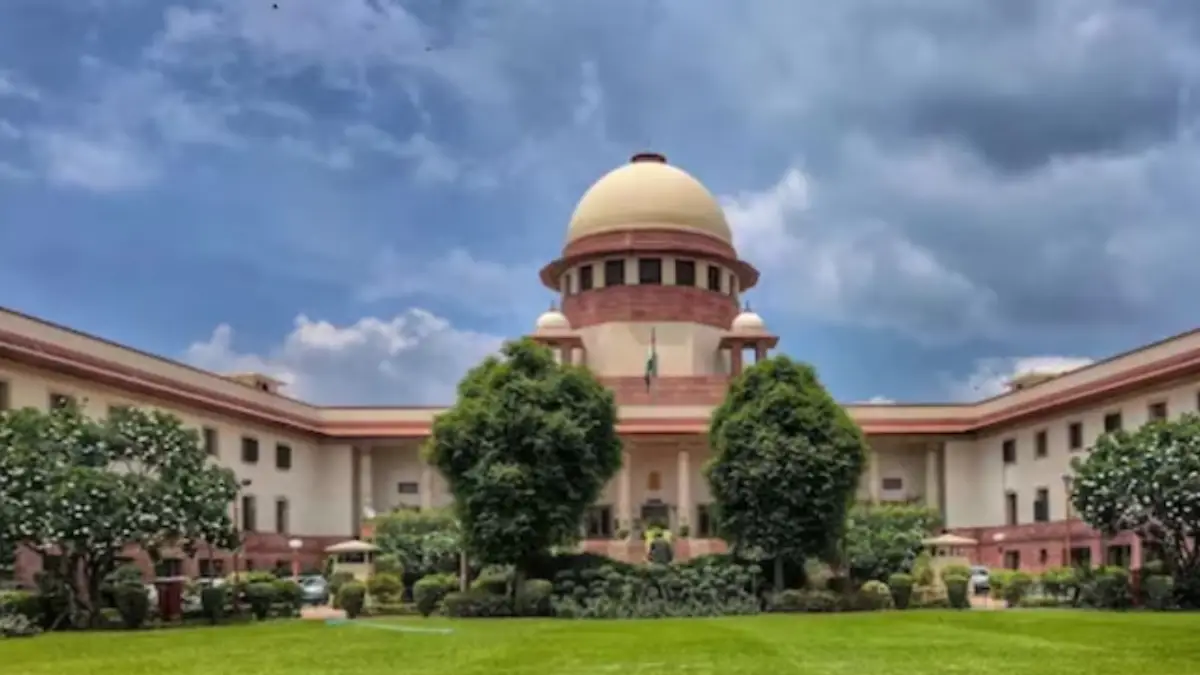
New Delhi: The Supreme Court has initiated suo motu proceedings over concerns surrounding its recent adoption of a new definition for the Aravalli Hills, scheduling a hearing for Monday, December 29, 2025.
A special three-judge vacation bench, led by Chief Justice of India Surya Kant, will examine the matter.
In a November ruling, the apex court endorsed recommendations from a committee under the Ministry of Environment, Forest and Climate Change. The panel defined “Aravalli Hills” as any landform in designated Aravalli districts with an elevation of at least 100 metres above the local relief.
The court agreed that the full landform within the lowest contour line—whether actual or notionally extended—including the hill, its slopes, and related features regardless of gradient, forms part of the Aravalli Hills.
ALSO READ : Belgium’s Supreme Court Rejects Mehul Choksi’s Appeal Against Extradition Order
Additionally, the committee described an “Aravalli Range” as two or more such hills situated within 500 metres of each other, measured from the outermost points of their lowest contour boundaries.
The November judgment also incorporated the panel’s guidelines on sustainable mining practices and measures to curb illegal extraction in the Aravalli Hills and Ranges.
It instructed authorities to delineate zones permissible for mining, alongside ecologically sensitive, conservation-essential, and restoration-priority areas where mining would be prohibited or allowed only in rare, scientifically supported cases.
The court further ordered that no new mining leases be issued until the Ministry of Environment, Forest and Climate Change, in collaboration with the Indian Council of Forestry Research and Education, finalises a Management Plan for Sustainable Mining.
Notably, the apex court adopted these recommendations even while acknowledging the Aravallis’ role as a vital “green barrier” that halts the Thar desert’s eastward expansion.
The decision to take suo motu cognisance on December 27 reflects heightened scrutiny of the elevation-based criteria and its implications.
-

-

-

-