
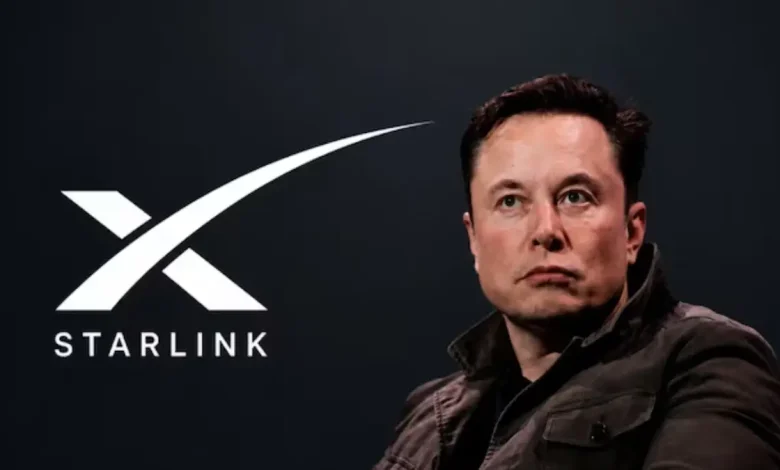
New Delhi : Elon Musk has long been pushing to bring Starlink’s satellite internet services to India. Although the rollout is still facing regulatory challenges, Musk has highlighted Starlink’s potential to improve connectivity in underserved parts of the country, particularly communities that currently lack reliable internet access.
The original post claimed that many villages in the country still did not have proper 4G connectivity. Internet subscriptions in rural areas are also fewer than in urban areas too, when it comes to density. In rural areas, the subscription density was 48.31 per 100 people, compared with 126.80 in urban India. Elon Musk’s comments come as Starlink has renewed efforts to launch its service in India. As per reports, the company has again applied to the Indian National Space Promotion and Authorisation Centre, or IN-SPACe, for approval of its Gen 2 constellation, which includes newer capabilities such as direct-to-device connectivity.
The Ministry of Home Affairs previously froze approval for Starlink due to security concerns. Starlink is a satellite-based internet service. Unlike traditional geostationary satellites, which are placed about 36,000 km from Earth and can create high latency, Starlink’s satellites operate much closer, at about 550 km in low Earth orbit. This allows faster data travel and lower latency. Starlink also does not need cell towers or any other ground infrastructure apart from a customer kit.
In rural areas, where cell towers are far and few, Starlink could help provide better coverage. Though it cannot entirely replace your traditional networks run by telecom operators like Jio or Airtel. Starlink can also remain useful during disasters such as earthquakes and floods, when cell towers and power lines may fail. The service has a fixed capacity that works best in areas of low density, which can be fine in remote areas, but may struggle in a city block with 50,000 people.



No non-geostationary satellite company, including Starlink and Jio’s joint venture with SES, has started commercial services in India so far, mainly because security clearance and spectrum allocation are still pending. The Telecom Regulatory Authority of India (TRAI) has made recommendations on satellite spectrum pricing, but the government has not taken a final decision.
Read Also : Teacher Grabs 6-Year-Old By Collar, Slaps Him; Boy Dies After Collapsing On Her | VIDEO