
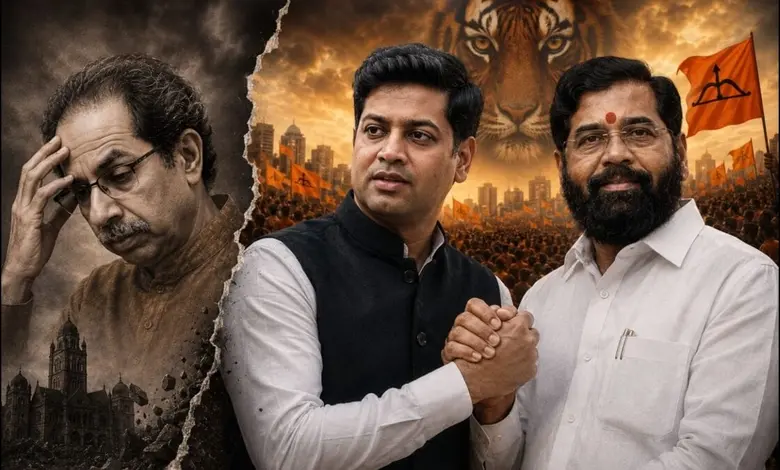
Mumbai: In Maharashtra politics, betrayals are rarely sudden. They are planned in whispers, sealed in closed rooms and executed before rivals fully realise what is happening. The collapse of Uddhav Thackeray’s Shiv Sena government in 2022 was no different. While Eknath Shinde emerged as the public face of the rebellion that split the Sena, many within political circles believe the operation had another silent architect his son, Lok Sabha MP Shrikant Shinde.
Even today, nearly four years after the revolt that changed Maharashtra’s political landscape, the role played by Shrikant Shinde continues to spark conversations inside Sena corridors. Soft spoken in public but politically active behind the scenes, Shrikant was seen by many as the link that quietly held the rebellion together when it mattered most.
The seeds of the split had been growing long before the dramatic scenes from Surat and Guwahati dominated television screens. Inside the Shiv Sena, resentment had been building ever since Uddhav Thackeray aligned with the Congress and the Nationalist Congress Party after the 2019 Assembly elections. Several Sena leaders felt the party had drifted away from Balasaheb Thackeray’s aggressive Hindutva identity. Others privately complained about losing direct access to Uddhav during his tenure as chief minister.
By mid 2022, the dissatisfaction had turned serious.


When Eknath Shinde first moved with a group of MLAs to Surat, many in the Sena leadership believed the rebellion would collapse within days. Instead, the numbers kept rising. Legislators quietly slipped out of Mumbai, phones went unanswered and panic spread through the Thackeray camp. Behind the scenes, political insiders say Shrikant Shinde played a crucial role in maintaining communication with uncertain MLAs and local leaders who were hesitant about openly supporting the revolt in its early stages.
His political strength came from years of grassroots networking in the Thane Kalyan belt, one of Shiv Sena’s strongest regions. Unlike many leaders who relied only on public speeches, Shrikant had built personal equations with district level organisers and younger party workers. That network became valuable once the rebellion gathered momentum.
As the rebel camp shifted to Guwahati and crossed the majority mark, it became clear that this was no temporary revolt. It was a takeover.
The crisis eventually brought down the Maha Vikas Aghadi government. Uddhav Thackeray resigned before facing a floor test, and in a dramatic political twist, Eknath Shinde took oath as Maharashtra Chief Minister with BJP leader Devendra Fadnavis beside him.
But the bigger battle came afterward.
The fight over the Shiv Sena name, symbol and legacy moved to the Election Commission and the Supreme Court. When the Election Commission later recognised the Shinde faction as the official Shiv Sena and handed over the iconic bow and arrow symbol, it marked a devastating moment for the Thackeray camp.
For many Shiv Sainiks, the emotional wound still remains fresh.
Yet within the Shinde camp, the rebellion is often viewed as a carefully executed political operation rather than a spontaneous uprising. And in that operation, Shrikant Shinde’s role continues to stand out. Once dismissed as merely the chief minister’s son, he emerged from the crisis as one of the quieter but sharper political strategists in Maharashtra’s new power structure.
The tiger, it seems, was trapped long before it realised the jungle had changed.
ALSO READ: Rebel Shiv Sena MPs Set to Formally Break Away from Uddhav Thackeray’s Faction