
Putin Signals Possible End to Ukraine Conflict, Open to Third-Country Summit with Zelenskyy
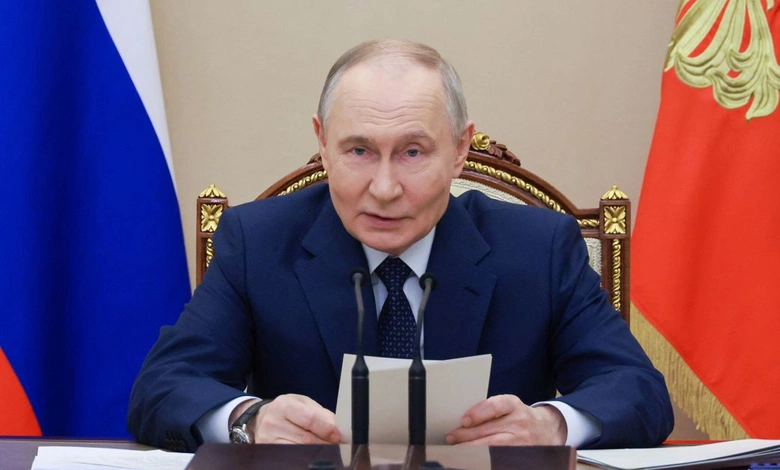
Russian President Vladimir Putin has indicated that Moscow’s military campaign in Ukraine could be approaching its conclusion, while expressing readiness to meet Ukrainian President Volodymyr Zelenskyy in a neutral third country once a comprehensive peace agreement is secured.
Putin made the statements to journalists on Saturday, shortly after delivering a victory pledge during Russia’s notably restrained Victory Day parade in Moscow. The comments coincide with the start of a three-day ceasefire between the two sides and plans to exchange 1,000 prisoners each, moves that have sparked cautious optimism about diplomatic advancement.
During the parade, Putin commended Russian forces engaged in Ukraine, describing their efforts as a justified response to what he called an aggressive NATO-backed adversary. “Victory has always been and will be ours,” he told the assembled troops on Red Square.
Speaking afterward, the Russian leader attributed the origins of the conflict to Western “globalist elites,” claiming they had assured no eastward NATO expansion following the 1989 fall of the Berlin Wall yet pursued closer ties between Ukraine and the European Union. He then stated plainly, “I think the matter is coming to an end.”
Russia’s Victory Day commemorates the Soviet Union’s defeat of Nazi Germany in World War II and remembers the 27 million Soviet deaths in that conflict. This year’s event was scaled back significantly, relying on large screens to display military equipment instead of the traditional procession of tanks and missiles through Red Square. For the first time, it included North Korean troops, acknowledging Pyongyang’s support in countering Ukrainian operations in Russia’s Kursk region.
The latest developments follow US President Donald Trump’s announcement of the temporary ceasefire and prisoner swap. Trump described ongoing talks as progressing and expressed hope that the truce marked “the beginning of the end” of the protracted war.
Zelenskyy had earlier suggested direct talks with Putin but rejected the idea of traveling to Moscow. In response to reporters, Putin confirmed that a meeting in a third country remained an option — but only to formalise a finalized long-term peace treaty, not to conduct negotiations.
Putin, who has led Russia as president or prime minister since late 1999, confronts growing domestic concerns over the war, now exceeding four years in duration — longer than the Soviet Union’s fight against Nazi Germany. The conflict has resulted in hundreds of thousands of casualties, widespread destruction across Ukraine, and significant strain on Russia’s economy. Despite slow advances this year, Russian forces control nearly one-fifth of Ukrainian territory but have yet to secure full control of the Donbas region.
When asked about potential discussions with European leaders on continental security, Putin named Germany’s former Chancellor Gerhard Schroder as his preferred interlocutor.