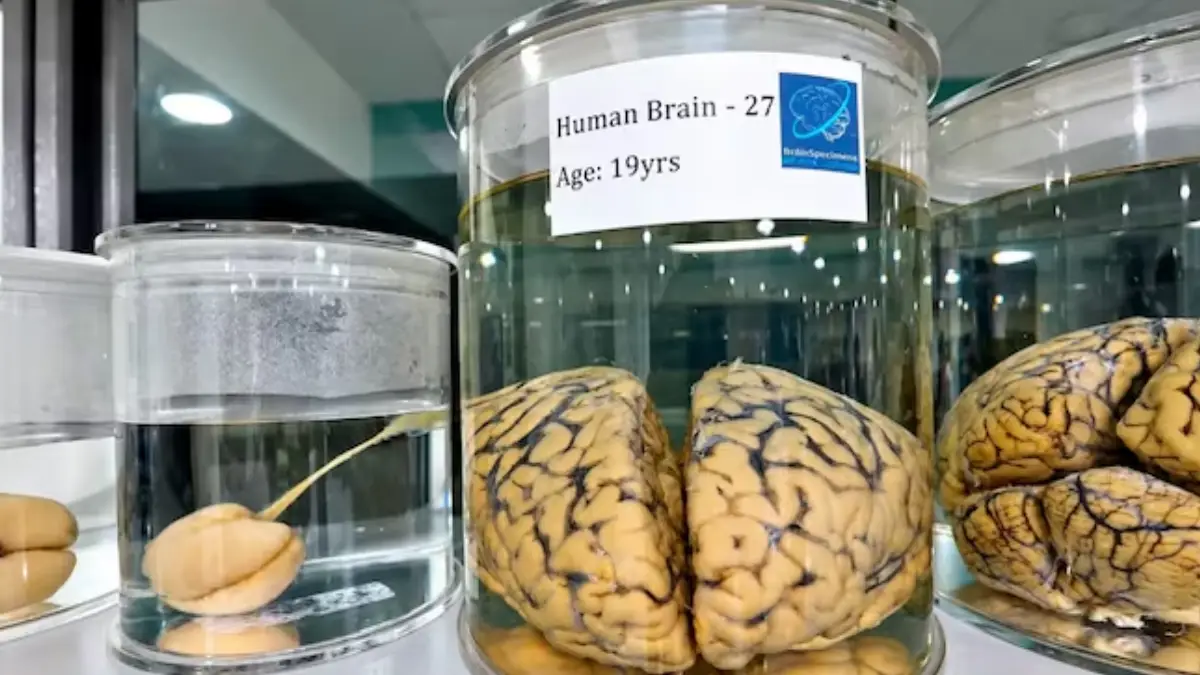
New Delhi : The ambitious project, launched by Prime Minister Narendra Modi, aims to create what the Sudha Gopalakrishnan Brain Centre (SGBC) at IIT Madras describes as the world’s largest collection of three-dimensional human brain maps at cellular resolution.
The centre will use specialised imaging technology and high-performance computing to transform entire post-mortem human brains into detailed digital 3D maps. The project will bring together more than 200 researchers, engineers and technicians, over 10 medical institutions across India, and more than 30 leading researchers from over 10 countries.
The resource connects conventional medical imaging with microscopic examinations of the same stroke-affected brain, helping scientists investigate what happens inside brain tissue when its blood supply is interrupted. Doctors typically identify stroke-related damage using magnetic resonance imaging (MRI), which captures structures at a millimetre scale. C-STROKE bridges these clinical images with histology, the microscopic examination of tissue, at micron-level resolution.
The atlas was generated using the Param Shakti supercomputer, supported by the Ministry of Electronics and Information Technology. Its open-access viewer and analytical tools will allow researchers worldwide to explore the data. C-STROKE builds on the centre’s earlier work, including DHARANI, released in December 2024, which contains 5,132 sections from five foetal brains.
Read Also : Rahul Gandhi Backs CJP Leaders After Their Arrest for Waving Tricolour at Jantar Mantar
-

-

-

-