
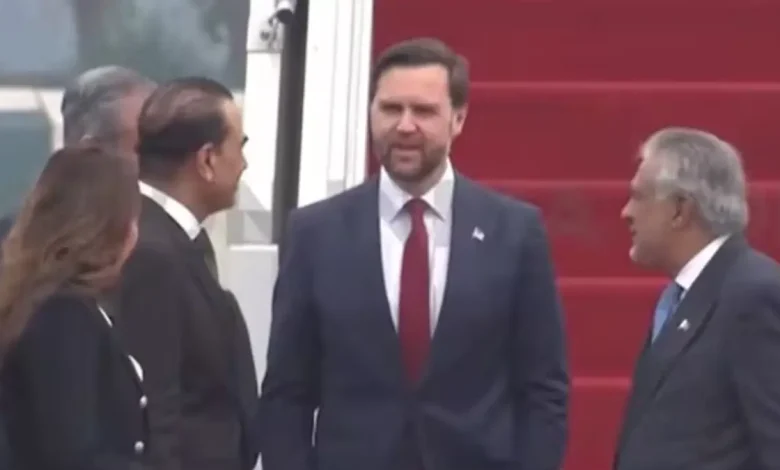
US Vice-President JD Vance and his delegation departed from Islamabad on Sunday after an intense 21-hour negotiating session in Pakistan failed to secure an agreement with Iran.
Vance blamed the breakdown on Iran’s unwillingness to accept key American conditions, particularly a firm commitment to abandon any pursuit of nuclear weapons or the means to rapidly develop them. “The bad news is that we have not reached an agreement, and I think that’s bad news for Iran much more than it’s bad news for the United States of America,” he stated. He added that the US had clearly outlined its red lines and would return home without a deal.
During the marathon talks, Vance consulted with President Donald Trump at least six times. He described preventing Iran from acquiring nuclear weapons as the central objective of the administration. “We need to see an affirmative commitment that [Iran] will not seek a nuclear weapon, and they will not seek the tools that would enable them to quickly achieve a nuclear weapon,” Vance said.
Iran’s semi-official Tasnim news agency reported that “excessive” US demands prevented any agreement, confirming the end of the negotiations. Earlier, Iran’s government had indicated on X that technical experts from both sides would continue exchanging documents.



The Islamabad meeting represented the first direct high-level contact between the United States and Iran in more than a decade and the highest-level engagement since the 1979 Islamic Revolution. Its failure carries implications for a fragile two-week ceasefire in the US-Israel war on Iran and efforts to reopen the Strait of Hormuz, through which roughly 20% of global energy supplies pass. Iran has blocked the strategic waterway since the conflict began, driving up world oil prices and contributing to thousands of deaths.
The US delegation, which included special envoy Steve Witkoff and Jared Kushner, held a two-hour session with Iranian parliamentary speaker Mohammad Baqer Qalibaf and foreign minister Abbas Araqchi. The Iranian team arrived dressed in black, mourning the late supreme leader Ayatollah Ali Khamenei and others killed in the war. They brought personal items belonging to students who died in a US bombing of a school adjacent to a military site. The Pentagon has said the strike is under investigation, while Reuters cited military investigators suggesting US responsibility.
A Pakistani source described shifting tensions during the talks, noting mood swings and fluctuating temperatures between the parties. Islamabad was placed under heavy security with thousands of paramilitary and army personnel deployed. Pakistan’s role as mediator marks a notable turnaround for a country that was diplomatically isolated only a year earlier.
Financial issues formed a significant part of the impasse. A senior Iranian source told Reuters that the US had agreed to unfreeze Iranian assets held in Qatar and other foreign banks, though a US official denied any such agreement. Iran has demanded control over the Strait of Hormuz, payment of war reparations, a broader regional ceasefire including Lebanon, and the right to collect transit fees through the waterway, according to Iranian state television and officials.
As negotiations began, the US military announced it was preparing to clear the Strait of Hormuz, with two warships reported to have passed through the area. Iran’s state media disputed that claim. Trump’s objectives have centered on ensuring free passage for international shipping and limiting Iran’s nuclear enrichment program.