
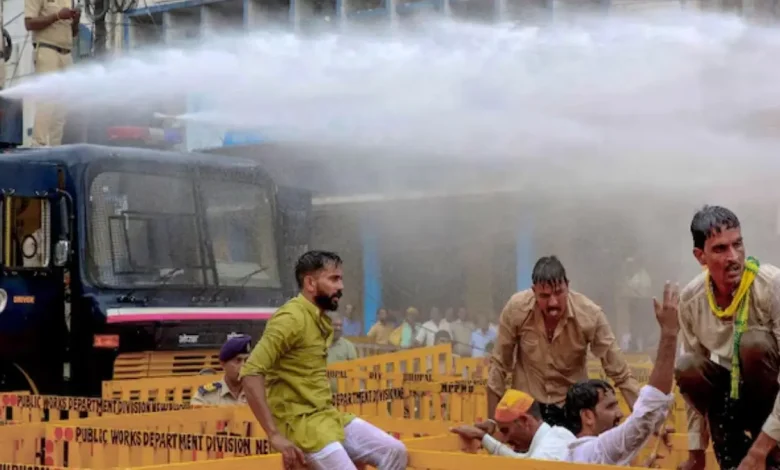
New Delhi : The Cockroach Janta Party (CJP) appears to have achieved its immediate objective with Education Minister Dharmendra Pradhan stepping down. The month-long agitation over the NEET paper leak and alleged irregularities in the examination system now appears to be over. One of the most notable consequences of the CJP agitation has been the emergence of a growing anti-reservation campaign. The movement is gaining momentum online and has the potential to reopen one of India’s most politically charged and socially divisive debates — the issue of caste-based reservation.
The Instagram account, which published its first post only six days ago, has already crossed 5.8 million followers. As its name indicates, the campaign is calling for major changes to the existing reservation system, with some supporters advocating its complete abolition. The timing of this campaign could create difficulties for political parties and the government. The growing anti-reservation sentiment, combined with an increasingly polarised public atmosphere, comes at a time when the country is still dealing with the fallout from the CJP protests and the earlier controversy surrounding the UGC equity regulations.
The reservation debate gained renewed attention during the NEET protests. Some campaigners pointed out that many of the NEET aspirants who allegedly died by suicide following the paper leak in May belonged to the General category. They argued that the reservation system had increased the level of competition and made the examination more difficult for unreserved-category students. That argument has continued to resonate even after the protests subsided. As the debate over the CJP agitation unfolded, the longstanding dispute over caste-based reservations returned to the forefront.
The CJP’s ability to mobilise people online also appears to have provided a model for groups seeking to promote anti-reservation campaigns. Opposition to caste-based reservations has existed for decades, almost since the system was introduced. However, the subject gained fresh visibility during the CJP protests. Reservation policies were originally designed to address historical caste-based discrimination and inequality. The latest controversy follows another major dispute over the UGC’s Promotion of Equity in Higher Education Institutions Regulations, 2026.




The rules proposed Equity Committees, Equity Squads and grievance-redress mechanisms to address caste-based discrimination on campuses. Their introduction triggered protests and political opposition in several parts of India, particularly in the caste-sensitive Hindi heartland. Students and organisations representing reserved communities welcomed the regulations, describing them as a long-overdue measure aimed at making higher education more inclusive and addressing discrimination.
Critics, however, took a different view. They argued that the regulations focused disproportionately on SC, ST and OBC students while failing to provide similar safeguards for those in the unreserved category. General-category students also alleged that some provisions were unclear, potentially one-sided and vulnerable to misuse. Protests were subsequently held outside the UGC headquarters in New Delhi before spreading to educational institutions in several states. Dharmendra Pradhan, who was serving as Education Minister at the time, sought to calm the situation by assuring students that the new rules would not be used to discriminate against anyone. He said that the UGC, the Centre and state governments would be responsible for ensuring that the provisions were not misused.