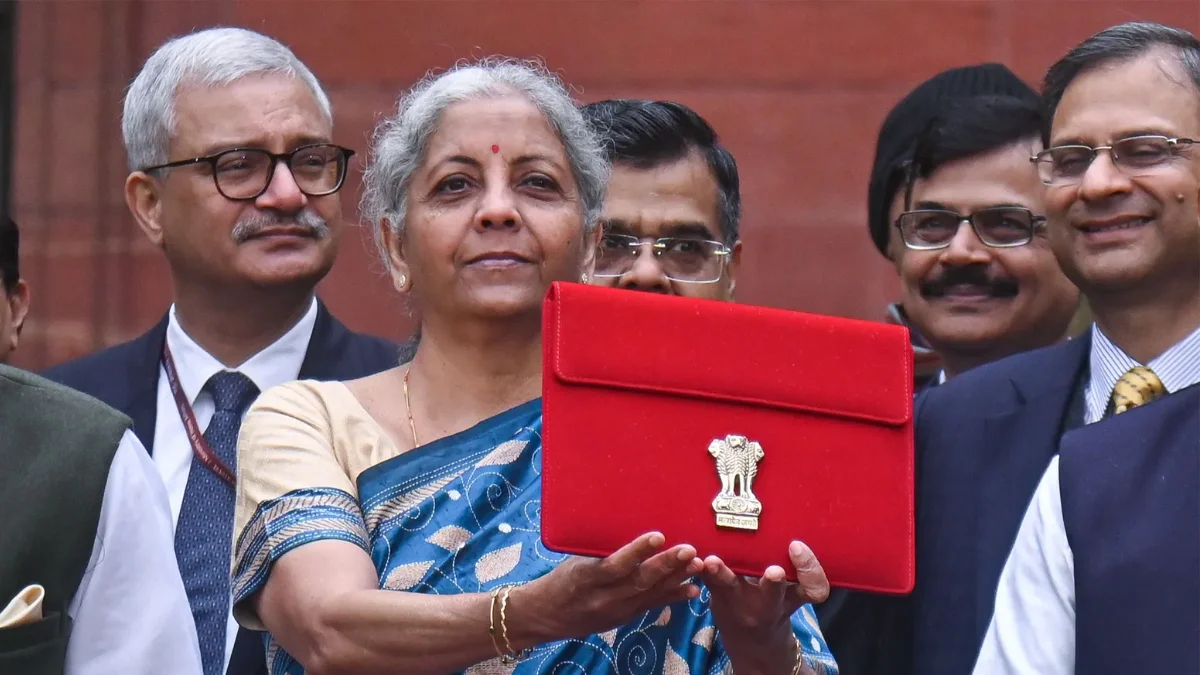
Union Finance Minister Nirmala Sitharaman on Thursday, January 29, tabled the Economic Survey 2025–26 in Parliament, offering a comprehensive snapshot of India’s economic performance ahead of the Union Budget 2026. Often described as the government’s annual “report card”, the Survey reviews developments over the past year and sets the context for policy decisions proposed in the Budget.
While a final assessment of the economy can only be made after the close of the financial year on March 31, 2026, the Economic Survey provides an informed and detailed evaluation based on available data. Presented ahead of the Budget on February 1, 2026, the document outlines key trends, challenges, and priorities, helping taxpayers, investors, and policymakers understand the rationale behind forthcoming fiscal measures. Without this backdrop, the Budget’s proposals would lack crucial context, as the Survey explains the underlying economic “whys”.
Key Takeaways From The Economic Survey 2025–26
The Survey notes that the global economic environment remains fragile amid escalating geopolitical tensions. Although global growth has shown resilience, risks persist and could affect trade flows, particularly given existing structural vulnerabilities.
Against this uncertain backdrop, India’s economic performance stands out. Early estimates indicate that India’s economy is expected to grow by 7.4 per cent in 2026, with Gross Value Added (GVA) growth projected at 7.3 per cent. This marks the fourth consecutive year in which India has recorded strong growth, outpacing all other major economies.
Private Final Consumption Expenditure expanded by 7.0 per cent in FY26, accounting for 61.5 per cent of GDP the highest share since 2012, a level also seen in FY23. The Survey attributes this growth to low inflation, stable employment conditions, and rising real purchasing power. Robust agricultural performance supported rural consumption, while improvements in urban demand, aided by tax rationalisation, point to broad-based consumption momentum.
Investment activity also gained strength during FY26. Gross Fixed Capital Formation rose by 7.8 per cent, with its share holding steady at 30 per cent of GDP. This expansion was driven by sustained public capital expenditure and a revival in private investment, reflected in corporate investment announcements.
On the supply side, the services sector continued to be the primary engine of growth. During the first half of FY26, services GVA increased by 9.3 per cent, with full-year growth estimated at 9.1 per cent, indicating broad-based expansion across the sector.
Highlights At A Glance
The Economic Survey estimates GDP growth at 7.4 per cent for the financial year 2026, while growth for 2027 is projected in the range of 6.8 per cent to 7.2 per cent. It also notes that the fiscal deficit remains on track to meet the 4.4 per cent target.
-

-

-

-