
New York : After more than a month of the US and Israel exchanging fire with Iran, the warring parties announced a two-week ceasefire on Wednesday. The fragility of the truce is visible in the points of ceasefire shared by Iran. The truce, announced by Pakistani Prime Minister Shehbaz Sharif, is set to last two weeks. Delegations from Tehran and Washington are expected to travel to Islamabad on Friday for talks aimed at forging a lasting peace deal.
Announcing the ceasefire, Sharif described it as “an immediate ceasefire everywhere, including Lebanon and elsewhere.” However, in a statement on X, Israeli PM Benjamin Netanyahu, while supporting the US decision to suspend strikes on Iran, explicitly said “the two-week ceasefire does not include Lebanon”. This is not only contrary to the terms of the ceasefire as presented by Pakistan, but also directly opposes one of the key points of Iran’s 10-point proposal, that is a halt to military operations against its allied armed groups across the region, including Hezbollah.
Questions are already being raised about how fragile the ceasefire is and whether it can even last its two-week timeline. Even as the announcement was made, the Associated Press (AP) reported missile alerts in the UAE, Israel, Saudi Arabia, Bahrain and Kuwait, with a gas processing facility in Abu Dhabi set ablaze after incoming Iranian fire on Wednesday. Earlier on Tuesday, the Israeli military said it had attacked an Iranian petrochemical site in Shiraz.
“So it’s not surprising that even though there does seem to be some kind of an agreement, it’s very fragile, and it’s probably going to take a while to work out,” Zakaria said. And in a sign of the lack of global confidence in the ceasefire, the Indian Embassy in Tehran issued a new advisory on Wednesday asking nationals still in Iran to leave the country quickly, despite the ceasefire coming into effect the same day.



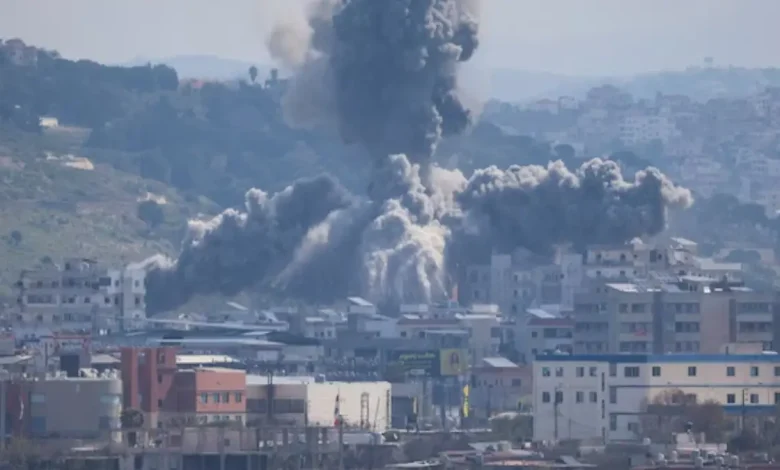
Any peace deal between the US and Iran remains contingent on the survival of the ceasefire, which calls for the cessation of hostilities everywhere, including Lebanon. The problem is that Israel, while supportive of the agreement with Iran, has made clear that its operations in Lebanon will continue. On March 2, the Israeli military launched a ground invasion of Lebanon to establish what it calls a buffer zone up to the Litani River in order to deter attacks by Hezbollah, Iran’s powerful proxy in the region.
On the other side, Tehran has demanded in its 10-point proposal the cessation of war on all fronts, including against the heroic Islamic Resistance of Lebanon. In the statement issued by Iran’s Supreme National Security Council, Tehran also emphasised the necessity of ending the war against all components of the Axis of Resistance. The Axis of Resistance, referred to as Axis of Evil by the West, is the network of armed proxies supported by Iran across the Middle East.
This puts Iran in direct opposition to Israel, which appears determined to eliminate the threat posed by Hezbollah once and for all. It also stands contrary to Iran’s 10-point proposal, which US President Donald Trump described as “workable”. This puts the entire ceasefire agreement and future peace talks in jeopardy.
Read Also : India Welcomes US-Iran Ceasefire, Expects Unimpeded Flow Of Commerce Through Strait Of Hormuz