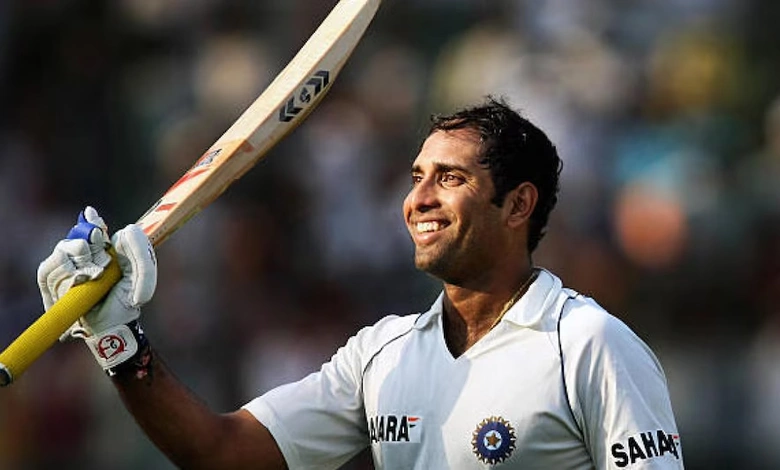
Indian cricket has produced numerous legends between 1932 and 2026, and countless memorable innings have been played during this long journey. However, whenever discussions about India’s greatest cricketing moments arise, the heroic 175 by Kapil Dev in the 1983 Cricket World Cup is always mentioned alongside the iconic 281 scored by VVS Laxman against Australia.
India has been blessed with batting legends such as Sunil Gavaskar, Gundappa Viswanath, Dilip Vengsarkar, Sachin Tendulkar, Rahul Dravid, Virender Sehwag, Sourav Ganguly, Mohammad Azharuddin, Yuvraj Singh, Virat Kohli and MS Dhoni. Likewise, great bowlers like Bishan Singh Bedi, Erapalli Prasanna, Bhagwat Chandrasekhar, Srinivas Venkataraghavan, Anil Kumble, Harbhajan Singh, Zaheer Khan, Jasprit Bumrah, Hardik Pandya, Kuldeep Yadav and Yuzvendra Chahal have produced several remarkable performances over the years.
Yet today, we focus on a single unforgettable innings — Laxman’s 281 in 2001. There is a special reason for revisiting it now: the historic knock has completed 25 years, marking its Silver Jubilee.
In Hindi films we often hear the phrase, “Bees saal pehle ki ye baat hai.” In this case, we must modify it slightly and say: “Pachees saal pehle ki ye baat hai.”
The Historic Test at Eden Gardens
From March 11 to 15, 2001, the second Test of the 2001 India vs Australia Test series was played at the iconic Eden Gardens in Kolkata.
Australia piled up 445 runs in their first innings, thanks to captain Steve Waugh’s 110 and Matthew Hayden’s 97. Although Harbhajan Singh claimed seven wickets, India collapsed to just 171 runs, with Glenn McGrath taking four wickets while Shane Warne and others kept the pressure on.
Most observers believed that Sourav Ganguly’s side was heading for an innings defeat. India was forced to follow on, and when openers Sadagoppan Ramesh and Shivam Amarnath Das failed to provide a solid start, defeat seemed inevitable.
Laxman’s Marathon of 281
Then came the moment that would rewrite cricket history.
When Ramesh was dismissed with India at 52, Laxman walked in at one-down. What followed was one of the greatest innings ever played in Test cricket. He batted for 631 minutes, faced 452 balls, and struck 44 boundaries without hitting a single six.
While Sachin Tendulkar (10) and Sourav Ganguly (48) fell cheaply, Laxman stayed at the crease from the 17th over to the 171st over.
At the other end, Rahul Dravid produced a legendary knock of 180 runs, and together the duo stitched a record 376-run partnership for the fifth wicket. Their stand erased Australia’s massive lead and gave India a 274-run advantage.
India eventually declared the second innings at 657 for 7, setting Australia a daunting target of 384 runs.
Harbhajan Completes the Miracle
Hardly anyone in the cricketing world believed that Australia — then the most dominant team in world cricket — could be pushed towards defeat.
But Harbhajan Singh ensured that the turnaround was complete. He took six wickets in the second innings, finishing with 13 wickets in the match. Sachin Tendulkar chipped in with three wickets, while Venkatapathy Raju claimed one.
Australia collapsed dramatically. Stars like Mark Waugh, Ricky Ponting, Adam Gilchrist and Shane Warne were dismissed for zero.
On the fifth day, Australia were bowled out for 212, and India secured a stunning 171-run victory.
A Match Written in Golden Letters
Consider the remarkable coincidence: India, who were all out for 171 in the first innings, ultimately won the match by 171 runs.
The Test remains etched in cricket history as one of the greatest comebacks ever. The contributions of Laxman, Dravid, Harbhajan and Tendulkar were monumental.
At that time, Australia dominated world cricket under Steve Waugh. Yet in this unforgettable match at Eden Gardens, India — led by Laxman’s brilliance — shattered that aura of invincibility.
Even after 25 years, the 281-run masterpiece continues to be celebrated as one of the finest innings in the history of Test cricket.
-

-

-

-