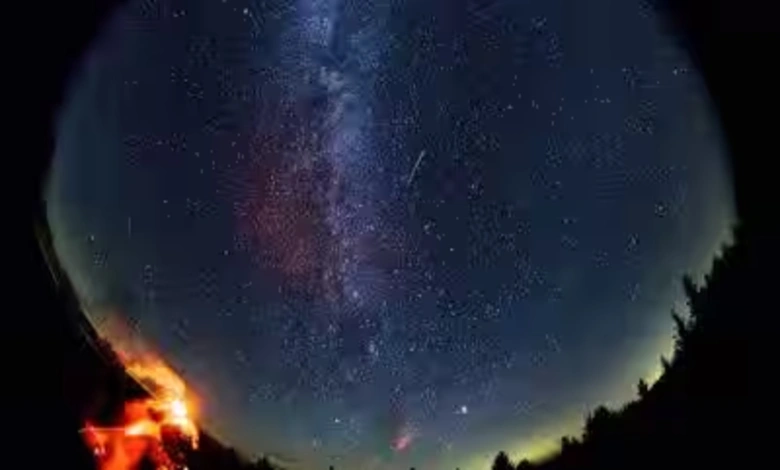
Sky enthusiasts are in for an extraordinary treat this summer. On a single day, August 12, 2026, two major astronomical events will coincide: a solar eclipse visible during daylight hours and the peak of the annual Perseid meteor shower after nightfall. This rare overlap promises a memorable day-and-night spectacle for observers across the Northern Hemisphere.
The alignment stems from the Moon’s position at new Moon phase, when it passes nearly in front of the Sun, enabling the eclipse. This same configuration leaves the night sky exceptionally dark, free from significant moonlight interference that often hampers meteor viewing. As a result, conditions for spotting the Perseids should be particularly favorable once darkness falls.
The solar eclipse will begin as the Moon moves between Earth and the Sun, casting its shadow across portions of the planet. A narrow path of totality will sweep across Greenland, Iceland, and parts of Spain, where lucky viewers will witness the Moon fully covering the Sun for a short time, plunging the area into brief daytime darkness. Broader regions will experience a partial eclipse, with the Moon appearing to take a significant bite out of the Sun’s disk. This includes large swaths of Europe, North America, and North Africa. In the United Kingdom and Ireland, many locations can expect more than 90 percent of the Sun to be obscured, creating a striking deep partial eclipse. In western Europe, the event will occur later in the day, with the partially eclipsed Sun low on the horizon for added visual drama.
As evening arrives and the eclipse concludes, attention will turn to the Perseid meteor shower. This annual display happens when Earth travels through debris shed by Comet Swift-Tuttle. Small particles streak into the atmosphere at high speeds, burning up and creating the brilliant flashes commonly known as shooting stars. The shower builds over weeks but typically reaches maximum activity around the night of August 12-13. The Perseids stand out among meteor events for their consistent performance, often delivering numerous meteors and occasional bright fireballs that leave persistent glowing trails.
No special equipment is needed to enjoy the Perseids. Observers achieve the best results by finding a dark location with a wide-open view of the sky, lying back, and simply watching patiently. Binoculars or telescopes can actually limit the experience by narrowing the field of view.
Safety remains paramount for the daytime eclipse. Direct viewing of the Sun, even during partial phases, risks serious eye damage. Certified eclipse glasses are essential throughout all stages when any portion of the Sun remains visible. Those without proper eyewear can use indirect methods, such as projecting sunlight through a perforated object like a colander to cast safe miniature images of the eclipse onto a surface below.
This convergence of events offers a unique opportunity for both casual skywatchers and dedicated astronomers to witness two distinct celestial wonders within hours of each other. With clear skies, August 12, 2026, could become a highlight of the year’s astronomical calendar.
-
-
-
-