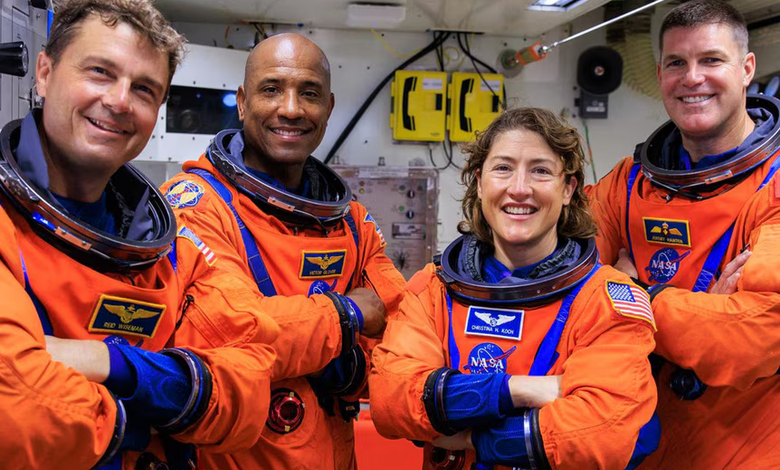
NASA is preparing for a landmark moment with its Artemis II mission, which will send astronauts around the Moon for the first time since the Apollo programme concluded in the 1970s. As explained in a SYFY Wire report, this mission represents a major step in humanity’s renewed push toward deep space exploration and long-term lunar presence.
Building on Artemis I
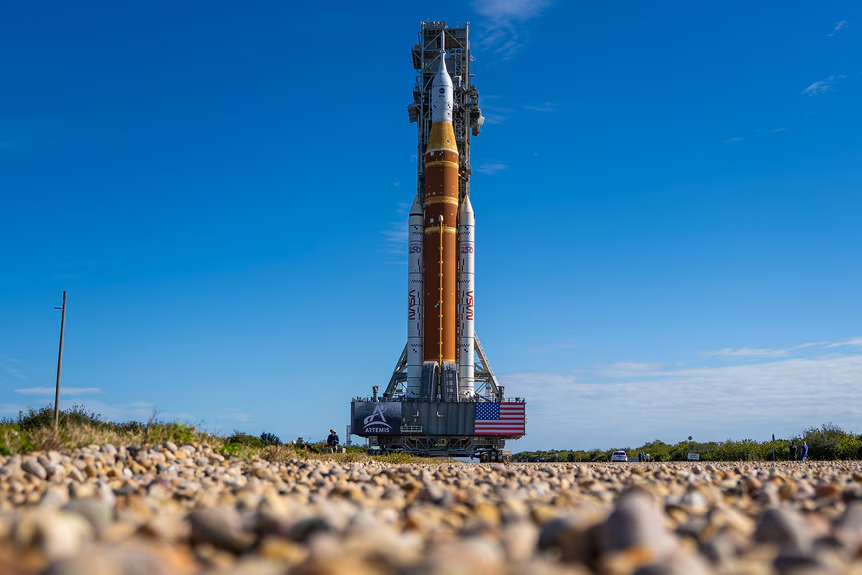
According to SYFY Wire, Artemis II follows the success of Artemis I, an uncrewed mission that tested critical systems, including the Orion spacecraft and Space Launch System (SLS). Data gathered from that earlier flight has been used to refine systems that will now be tested with astronauts onboard.

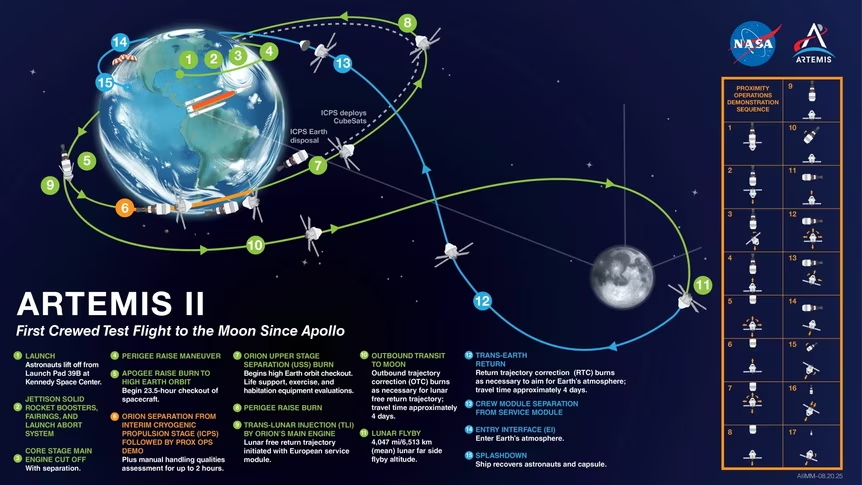
Mission Objectives and Journey
The mission is not designed for a lunar landing. Instead, as highlighted by SYFY Wire, Artemis II will focus on evaluating life-support systems, navigation, and communication technologies essential for human survival in deep space. The crew will travel on a roughly 10-day journey, looping around the Moon before returning to Earth.
Why Artemis II Matters
The report underscores that Artemis II serves as a critical test flight, ensuring that all systems function safely before future missions attempt a landing. It is comparable in purpose to earlier Apollo missions that paved the way for humans setting foot on the Moon.

Who are the Artemis II crew members?
The Artemis II mission will be led by a four-member crew with diverse experience in spaceflight and aviation.
- Reid Wiseman will serve as the mission commander. A former US Navy pilot, he previously traveled to space in 2014 and later held the position of Chief of NASA’s Astronaut Office.
- The role of pilot will be handled by Victor Glover, who flew on a SpaceX mission to the International Space Station in 2022. With this mission, he is set to become the first person of color to journey to the Moon.
- Christina Koch will take on the responsibilities of a mission specialist. She is expected to become the first woman to complete a lunar flyby. Koch already holds the record for the longest single space mission by a woman, having spent 328 days in orbit, and was also part of the first all-female spacewalk.
- Completing the crew is Jeremy Hansen, another mission specialist and a fighter pilot from Canada. His participation will mark the first time a non-American astronaut travels around the Moon.
A Step Toward Future Exploration
As noted by SYFY Wire, Artemis II is part of a broader programme aimed at establishing a sustained human presence on the Moon and eventually enabling missions to Mars. By successfully demonstrating the capability to carry astronauts safely beyond Earth’s orbit, NASA aims to lay the groundwork for more complex missions in the coming years.
Also Read: Why Did Australia’s Sky Turn Blood Red Before Cyclone Narelle? Explained
-

-
-

-