
India is among the fastest-growing economies in the world. It is, in fact, the sixth-largest economy by nominal GDP, with an estimated size of around $4.15 trillion. When measured by Purchasing Power Parity (PPP), India stands much higher, at third place globally, trailing only the United States and China.
Similarly, India has grown by leaps and bounds in the field of science and technology since gaining independence from British rule on August 15, 1947. According to global rankings, India stands third in scientific publications and 38th in the Global Innovation Index. The country has rapidly scaled its research output, patent filings, and high-impact contributions across global science, technology, and innovation frameworks.
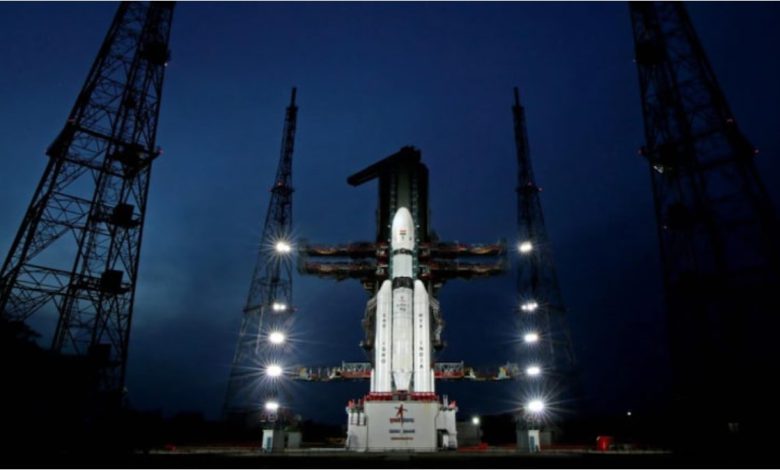
One of India’s most visible scientific achievements has been its space programme, led by the Indian Space Research Organisation (ISRO). Here’s a look at some of the key developments and achievements in space science over the last two decades.
From 2006 to 2026, India has shown exceptional growth, undertaking lunar, Martian, solar, astronomical, and deep-space missions while demonstrating advanced technologies such as autonomous satellite docking.



Chandrayaan-1: India Reaches the Moon — 2008
A major turning point for India’s Space Science capabilities came on October 22, 2008, when it launched Chandrayaan-1, India’s first mission to the Moon, carrying 11 scientific instruments from India and international partners.
Beyond mapping the Moon’s chemical, mineralogical, and geological characteristics, Chandrayaan-1 detected evidence of hydration and water-related signatures on the lunar surface and its near-surface environment. The mission demonstrated that India could conduct sophisticated planetary science, and that its capabilities weren’t limited to merely launching communication and Earth-observation satellites.
Mars Orbiter Mission — 2013
On November 5, 2013, ISRO launched the Mars Orbiter Mission, or Mangalyaan, becoming the fourth space agency in the world to successfully place a spacecraft in Mars orbit.
The mission was designed to last six months but ended up completing seven years in Mars orbit. During this time, the spacecraft studied aspects of the Martian surface, atmosphere, morphology, mineralogy, and the Martian exosphere. Its Mars Colour Camera also produced more than 1,100 images for scientific study.
Also Read:India Advances Layered Air Defence with Successful Kusha Missile Test
Multi-Wavelength Astronomy — 2015
On September 28, 2015, India launched AstroSat, an astronomical observatory designed to study celestial objects across multiple wavelengths. It has helped Indian scientists investigate phenomena involving stars, galaxies, X-ray sources, black holes, neutron stars, and high-energy astronomical events.
Chandrayaan-2 in 2019
India launched Chandrayaan-2 on July 22, 2019. The mission consisted of an orbiter, lander, and rover. Although the lander did not achieve a successful soft landing, the orbiter continued operating and producing valuable scientific data.
Chandrayaan-3: Historic Lunar Landing — 2023
On August 23, 2023, Chandrayaan-3 successfully soft-landed on the Moon. With this achievement, India became the first country to land in the Moon’s southern high-latitude region and only the fourth country to achieve a soft lunar landing overall.
The Vikram lander and Pragyan rover went on to conduct scientific experiments on the lunar surface for more than 14 Earth days.