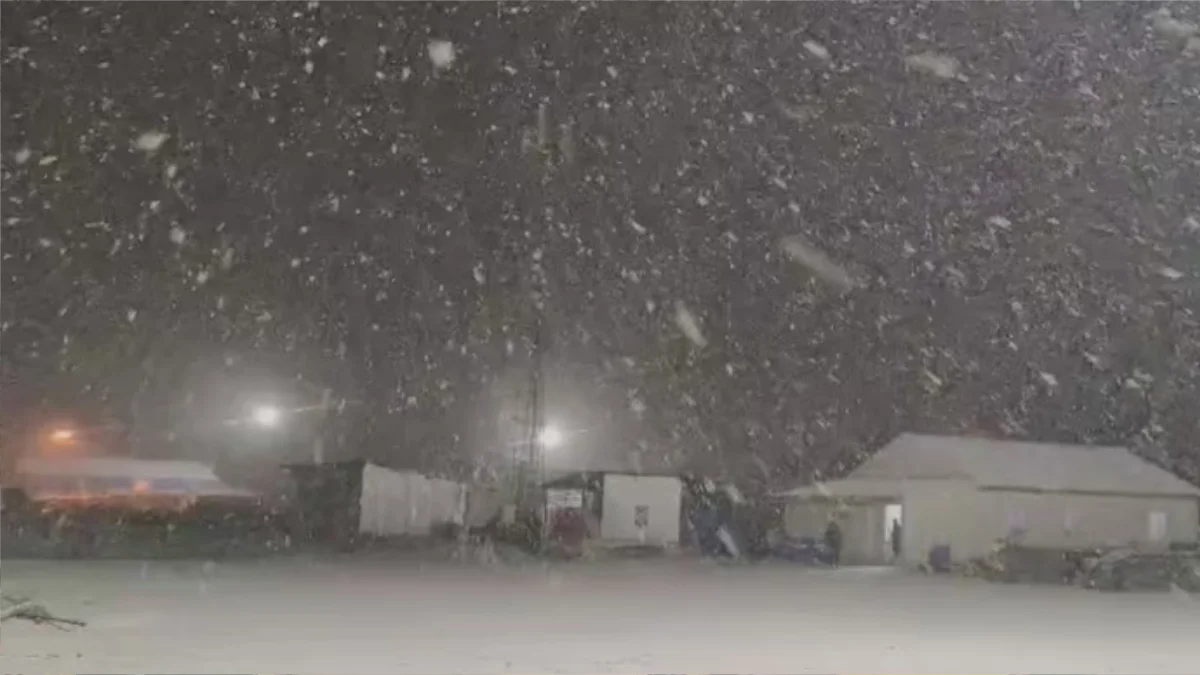
Kashmir experienced its first snowfall of the season as Chilaikalan began, ending an extended period without precipitation and offering much-needed relief to locals who had endured months of extremely dry conditions.
Snow was observed in Gurez valley, Warwan valley and elevated areas across southern and northern Kashmir, including Sinthan Top, Razdan Pass, Sadhna Top, Zojila and Sonmarg. New snowfall was also documented in Drass and several locations in Kargil district, indicating a broad wet weather pattern throughout the region’s mountainous zones.
The snowfall brought significant relief to residents following one of the most severe dry periods in recent years. The valley had experienced roughly two months without meaningful rainfall or snow, worsening dry cold conditions and raising concerns about rapidly shrinking water resources.
IMD predicts continued snowfall in Jammu-Kashmir
The India Meteorological Department has issued a forecast for moderate to heavy snowfall in elevated areas of Jammu and Kashmir on Sunday, with increasing activity anticipated over the coming two days. Authorities indicated the precipitation will likely become more extensive, especially in mountainous regions, and may persist intermittently until December 22.
This wet weather pattern is expected to relieve the intense dry cold affecting Kashmir and assist in restoring glaciers, streams and springs that had started to diminish at alarming rates. The development has also sparked cautious hope in the tourism industry, which had suffered from the lack of snow during what is normally the busiest winter period.
CM Omar Abdullah evaluates winter readiness
As weather conditions shifted, Jammu and Kashmir Chief Minister Omar Abdullah conducted a review meeting on Saturday regarding winter preparedness across both Kashmir Valley and Jammu region. He stated that all necessary arrangements had been made to handle heavy snowfall, though their true capability would only become apparent once the weather system fully develops.
“I assessed readiness in both divisions, particularly in snowfall-prone areas, including all Valley districts and Jammu’s higher elevations. Preparations are complete, but the actual challenge will emerge when snowfall begins,” Abdullah informed reporters.
While recognizing that snowfall may create difficulties, he noted the region had been desperately waiting for it following the extended dry period. “The snowfall will improve air quality, reduce pollution levels and launch the winter tourism season,” he stated.
Roads, electricity and healthcare priorities
The chief minister explained that the administration’s winter response would be evaluated based on three key factors: prompt road clearing, continuous power supply and access to drinking water. He instructed departments to ensure early deployment of personnel and equipment and to take a proactive rather than reactive stance.
During the power sector review, Abdullah mandated close monitoring of transformer oil stocks and warned against theft. He also emphasized the importance of utilizing distribution transformer reserve supplies promptly to reduce power outages.
Regarding healthcare readiness, he recommended optimal positioning of 4×4 ambulances in the most remote locations, with chain-fitted ambulances deployed in other areas. In Srinagar, he ordered early placement of mobile de-watering pumps in flood-prone zones and expressed concern about passenger amenities at the airport during weather-induced flight delays.
Water shortage worsens during dry conditions
The extended lack of precipitation had created a water stress scenario in Kashmir, with rivers, waterfalls and natural springs showing substantially decreased flow. Multiple areas reported drying water sources, prompting authorities to control water release to preserve supplies.
Government agencies have initiated water rationing in portions of the valley to maintain availability for critical requirements, including drinking water, agricultural irrigation and aquatic ecosystem protection.
Climate change transforming Kashmir’s weather systems
Meteorological experts and environmental analysts link the unpredictable conditions to climate change’s increasing influence on Kashmir’s historically consistent weather patterns. Recent years have brought extreme fluctuations from heavy rainfall over brief intervals to drought-like conditions, abnormally warm summers and extended dry cold winters.
“These changes are no longer unusual occurrences,” experts caution, identifying climate change as the primary factor disrupting Kashmir’s natural water cycle.
Read More:
While the current rain and snow episode is anticipated to deliver short-term relief, specialists emphasize that sustainable solutions are critical. They have advocated for a thorough water conservation approach, integrating immediate actions with long-range scientific planning, to protect the valley from future climate-related challenges.
-

-

-

-