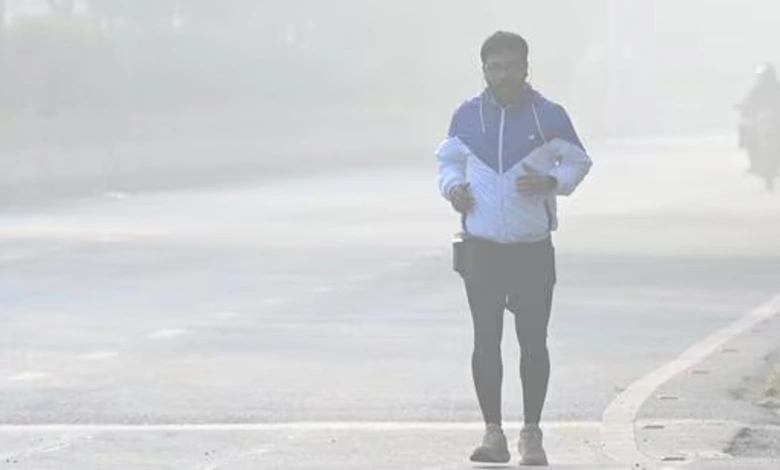
New Delhi: The national capital and surrounding areas of the National Capital Region (NCR) woke up to a thick blanket of smog combined with dense fog on Monday, severely impacting visibility and air quality. According to the Central Pollution Control Board (CPCB), Delhi’s overall Air Quality Index (AQI) stood at 418 at 8 am, firmly in the ‘severe’ category on the scale of 0 to 500.
Particularly alarming readings emerged from several locations: Dhaula Kuan and Pandav Nagar registered 455, while ITO recorded 434. The deteriorating conditions prompted authorities to enforce Stage-4 restrictions under the Graded Response Action Plan (GRAP), the strictest level of anti-pollution measures. Residents, particularly vulnerable groups such as children, the elderly, and individuals with respiratory conditions, received strong advisories to minimise outdoor exposure.
The situation had worsened noticeably over the weekend. On Sunday, multiple monitoring stations reported prolonged periods in the ‘severe’ category, with some entering the ‘severe-plus’ range. Anand Vihar hit a peak of 497, while Mundka and Rohini both reached 491. Of the 37 operational continuous ambient air quality monitoring stations in the city, 32 showed ‘severe’ levels in the standard 4 pm assessment, with the remaining five in the ‘very poor’ bracket. Ayanagar recorded the city’s lowest reading at 356.
Pollution intensified from Saturday onward, affecting well-known hotspots including Nehru Nagar in Lajpat Nagar, Sonia Vihar, Wazirpur, Ashok Vihar, Bawana, Jawaharlal Nehru Stadium, and Delhi University’s North Campus. The AQI calculation incorporates concentrations of eight key pollutants—PM10, PM2.5, nitrogen dioxide, sulphur dioxide, carbon monoxide, ozone, ammonia, and lead—with the highest sub-index determining the overall value.
ALSO READ :” Dense Fog Blankets Delhi-NCR, Low Visibility At Airport Amid Cold Wave
Data highlighted extreme particulate matter levels: at Anand Vihar, PM2.5 concentrations soared to 890 micrograms per cubic metre around 1 am—nearly 15 times the national daily standard and 59 times the World Health Organisation’s safe guideline. The Delhi Pollution Control Committee reported a peak PM2.5 level of 952 micrograms per cubic metre in Nehru Nagar on Saturday night.
Experts link the sharp rise to a mix of local emissions—such as vehicular, industrial, and construction sources—and stagnant meteorological conditions, including low wind speeds that trap pollutants close to the ground. These circumstances heighten health risks, especially for sensitive populations.
The combined smog and fog also affected transportation. Low visibility caused delays to several flights at Indira Gandhi International (IGI) Airport, adding to the disruptions faced by commuters and travellers across the region.
-

-

-

-