
Varun Singh
Mumbai’s property market is recording more registrations, but the state government is not earning proportionately more from them. That divergence is becoming difficult to ignore. It suggests that the city’s housing market is seeing a growing share of resale transactions, rather than a broad-based surge in new, high-value home sales.
The September numbers make the point most clearly. Mumbai recorded 12,614 property registrations in September 2026, compared with 12,070 in September 2025, an increase of about 4.5 per cent. Yet stamp duty collections fell to ₹1,220 crore from ₹1,292 crore, a decline of nearly 5.6 per cent. More transactions, therefore, did not translate into higher revenue.
June sends out an equally strong signal. Registrations rose from 11,597 in June 2025 to 13,413 in June 2026, an increase of 15.7 per cent. Stamp duty collections, however, moved from ₹1,035 crore to ₹1,085 crore, a rise of just 4.8 per cent. The number of deals grew much faster than their value.



July and August offer thinner support to this narrative, and the data should not be stretched beyond what it says. In July, registrations rose from 12,579 to 13,824, or 9.9 per cent, while stamp duty collections increased from ₹1,123 crore to ₹1,255 crore, or 11.8 per cent. In August, registrations climbed from 11,230 to 12,580, a 12 per cent rise, while revenue increased from ₹1,000 crore to ₹1,130 crore, or 13 per cent. These months show continued demand, but not a clear fall in transaction values.
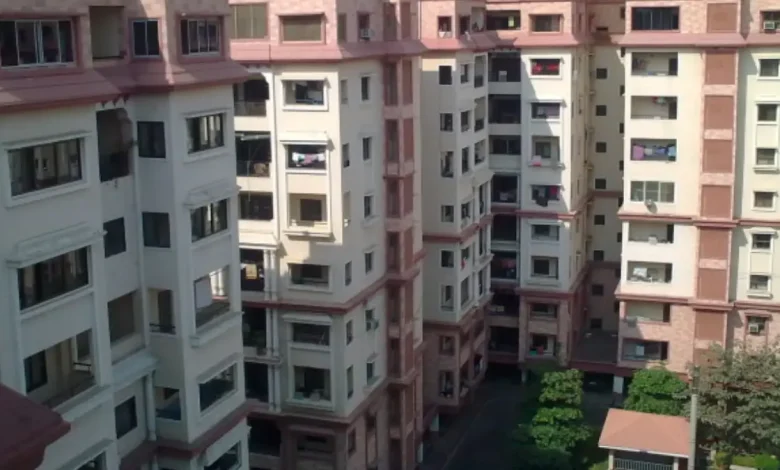
The larger trend, however, may have more to do with the kind of homes being bought. A few-year-old apartment is often available at a discount to a new project in the same locality. Older buildings also tend to offer larger homes, while the carpet area in new construction has steadily become a concern for buyers. For many families, a bigger resale flat can appear more attractive than a smaller new apartment sold at a premium.
There is another powerful factor at work: redevelopment. Mumbai’s redevelopment frenzy has created an expectation that an old building may eventually be transformed into a modern project. Buyers are therefore not only purchasing a resale flat; some are also buying the possibility of a larger home, better amenities and a higher future value.
This does not mean every resale purchase is a sound investment, or that every old building is headed for redevelopment. Buyers must examine title records, society documents, structural condition and the credibility of any redevelopment proposal.
Builders, meanwhile, should read these figures as a warning rather than a crisis. Expensive homes naturally generate higher stamp duty, while resale transactions are often assessed at ready reckoner values when declared sale prices are lower than new-project prices. The numbers suggest that demand has not disappeared. It is becoming more price-conscious, more selective and increasingly willing to look beyond the new-launch market.
Varun Singh X:@singhvarun
Read Also : This Kandivali Fight Helps Every Resale Home Buyer In Mumbai