

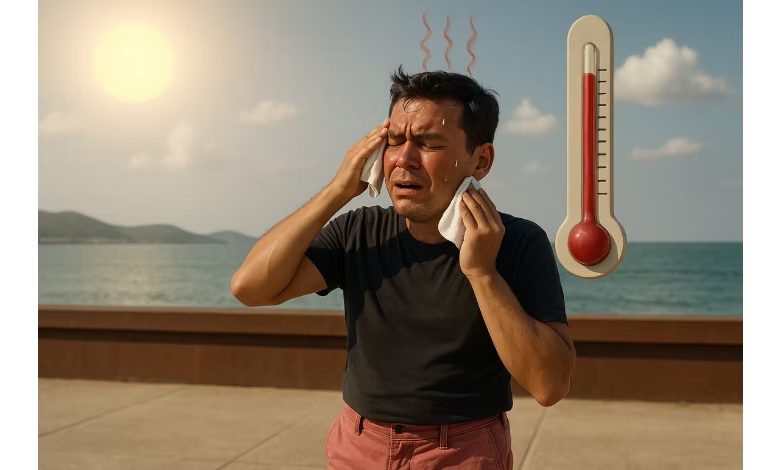
Even as the monsoon reaches northern parts of the country, residents in major cities continue to grapple with intense discomfort from heat and humidity. In late June, cooling centres in Delhi drew crowds of workers, drivers, and others seeking relief from sweltering conditions. One autorickshaw driver noted how high humidity rendered his home cooler ineffective, mirroring the oppressive feel outside where the heat index had climbed as high as 53°C.
The arrival of rains has not fully eased the thermal stress. Data on the heat index over recent years indicates that high moisture levels often make the perceived temperature significantly higher than the actual air reading. This has prolonged periods of heavy reliance on air conditioning, driving up electricity demand during the July-August window.
Experts highlight several emerging patterns: a notable increase in warm nights, rising relative humidity particularly across the Indo-Gangetic Plain, and greater overall heat exposure in densely populated urban centres including Delhi, Mumbai, Ahmedabad, Hyderabad, Bhopal, and Bhubaneswar. Analysis covering hundreds of districts points to these trends as part of broader shifts.
A recent assessment shows that the annual count of dangerously humid heat days in India has risen substantially since the 1970s, with similar increases observed in several cities. These conditions are defined by elevated wet-bulb temperatures of 25°C or more, where the body’s ability to cool through evaporation is impaired. Factors such as ocean warming contribute by supplying additional moisture from surrounding seas, which interacts with urban heat island effects caused by extensive built-up areas. This combination limits nighttime cooling and sustains higher daytime temperatures when humidity lingers without sufficient rainfall.



A post shared by Mumbai Samachar English (@mumbaisamacharenglish)
Studies of smart cities reveal persistent nighttime heat waves in multiple locations, alongside compound day-and-night heat in others. Many existing heat action plans focus primarily on daytime measures like water provision and awareness campaigns, often overlooking the full 24-hour cycle of risks. Recommendations include cool roofs, increased greenery, better ventilation, and reliable power supply, along with passive cooling techniques tailored to local contexts.
Specialists emphasise the need for context-specific approaches. Cool roofs, for instance, may help reduce surface heat retention on certain materials but have limitations depending on building types and seasonal variations. Greening efforts must balance shade with moisture management and airflow to avoid exacerbating humidity in already moist environments. Traditional designs that once aided cooling are less effective amid widespread urban expansion.
Forward-looking initiatives in several cities are incorporating more comprehensive assessments, including humidity and nighttime temperatures, alongside vulnerability mapping. Some are developing digital tools for detailed heat stress monitoring at the building level and extending cooling measures year-round. These steps aim to build greater resilience against evolving heat patterns through targeted, sustained urban planning.