Mumbai is poised for another day of intense heat and humidity on Thursday, March 12, as the India Meteorological Department (IMD) predicts mainly clear skies across the city and its suburbs. The maximum temperature is expected to climb to around 36°C, while the minimum will hover near 24°C, continuing the spell of hot conditions that have gripped the region.
According to the IMD forecast, both urban and suburban areas will experience predominantly clear weather over the next 48 hours, with no specific weather warnings in place. Hot and humid conditions are likely to prevail, particularly in the suburbs, making outdoor activities challenging during peak hours.
Area-wise variations show some differences. In Santacruz, the temperature range is anticipated to be between 34°C maximum and 23°C minimum under clear skies. Similar patterns are expected in Chembur and Mulund, with daytime highs around 34°C and nighttime lows near 23°C. Coastal zones like Colaba may see slightly cooler conditions, with a maximum of about 33°C and minimum of 23–24°C. Powai is also forecast to have mainly clear skies, with temperatures ranging from 33°C during the day to 23–24°C at night.
ALSO READ : LPG Rationing Hits Steel Units, Food Makers and Dal Mills in Nagpur
Looking ahead, the weather is set to stay consistent over the coming days. On March 13, most parts of Mumbai are likely to record maximum temperatures around 33°C and minima near 23°C, still under clear skies. By March 14, daytime highs could edge up again to 34–35°C in several areas. No rainfall is expected in the near term.
The ongoing hot and humid weather has raised concerns about its impact on air quality. A study by Climate Trends, drawing on Central Pollution Control Board data and reported by the Times of India, indicates that meteorological factors alone can alter pollution levels by as much as 40 per cent in Indian cities, even without changes in emissions. Low wind speeds and elevated humidity tend to trap pollutants near the ground, worsening PM2.5 concentrations.
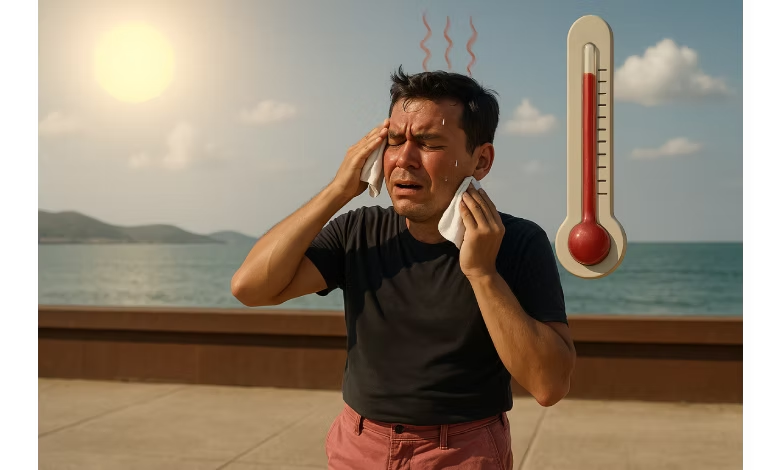
With the heat persisting, authorities are urging residents to take preventive measures. People are advised to limit exposure to direct sunlight, especially from late morning through early afternoon, and to stay well-hydrated by drinking water regularly, regardless of thirst. Light-coloured cotton clothing, along with head protection such as caps, scarves, or umbrellas, can help mitigate risks. Symptoms of heat stress—including weakness, dizziness, headaches, nausea, or heavy sweating—should prompt immediate medical consultation. For those working outdoors, scheduling strenuous activities for cooler periods and incorporating frequent breaks is recommended to prevent heat-related issues.