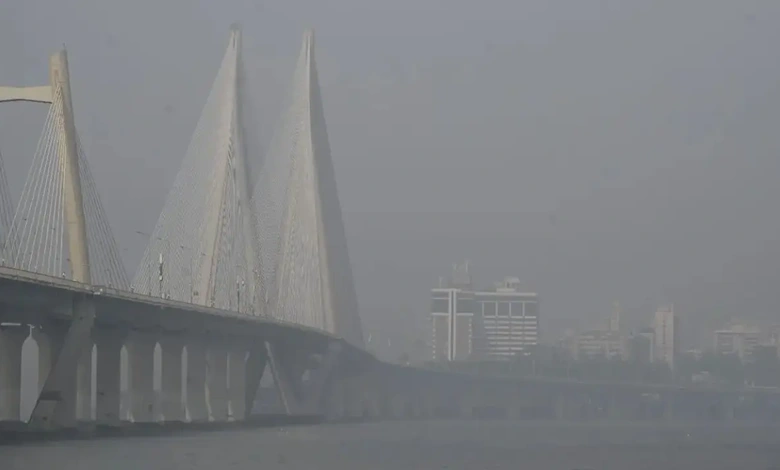
Mumbai residents faced a hazy start to Tuesday as a thick layer of smog covered the city, diminishing visibility and highlighting ongoing air quality challenges despite otherwise favorable weather.
The India Meteorological Department (IMD) had forecasted clear skies, light winds, and temperatures between 18°C and 32°C for a pleasant day. However, morning commuters and pedestrians encountered reduced clarity and a sharp odor in many areas, especially in lower elevations and high-traffic zones.
Data from the air quality monitoring platform AQI.in showed Mumbai’s overall Air Quality Index (AQI) at 283 in the early hours, falling into the ‘unhealthy’ category. This represented a slight improvement from severe levels seen earlier in the month, but specialists noted that the conditions still posed risks, particularly to children, the elderly, and those with respiratory or heart conditions.
ALSO READ : Hawkers Forced Pedestrians into Path of Deadly Mumbai Bus in Bhandup Tragedy, says eyewitness
The pollution stemmed mainly from dust and particulate matter produced by extensive construction projects across the city, such as metro lines, flyovers, coastal road developments, and road expansions, alongside private building works. Heavy vehicular traffic during rush hours compounded the issue.
Certain locations registered particularly high pollution. Wadala Truck Terminal reported an AQI of 363, in the ‘severe’ range, which can affect even healthy people. Chembur recorded 334, Jogeshwari West 322, Kurla 318, and the Bandra Kurla Complex (BKC) 315—all severe. Suburban spots like Kandivali East (157), Jogeshwari East (187), Borivali East and West (203 and 207), and Mulund West (207) were in the ‘poor’ category.
Under standard AQI guidelines, readings of 0-50 are ‘good’, 51-100 ‘moderate’, 101-200 ‘poor’, 201-300 ‘unhealthy’, and above 300 ‘severe’ or ‘hazardous’.
-

-
-

-