
Mumbai Water Cuts To Stay Despite Reservoir Levels Jumping After Heavy Rain, Vihar Lake Overflows
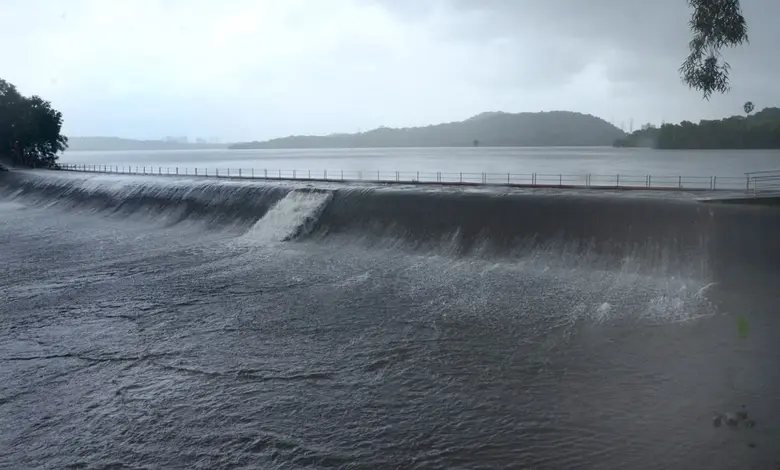
Mumbai: Continuous heavy rainfall across Mumbai and several parts of Maharashtra has led to a significant rise in water levels at the reservoirs supplying the city. Even so, the Brihanmumbai Municipal Corporation (BMC) has decided to continue the existing water restrictions, saying it is too early to ease them.
According to the latest figures released by the civic body, the combined storage in Mumbai’s seven water reservoirs increased from 16.92% on Monday to 28.92% by Tuesday morning, marking the biggest single day improvement of the current monsoon season. Water storage rose from 244,000 million litres to 418,000 million litres, an increase of nearly 174,000 million litres, or about 71%.
The overnight downpour also caused Vihar Lake, the smallest of Mumbai’s water supply reservoirs, to overflow. Officials attributed the sharp rise in storage to heavy rainfall across the reservoirs catchment areas over the past 24 hours.
Among the catchment regions, Modak Sagar recorded the highest rainfall at 345 mm, followed by Tansa (322 mm), Middle Vaitarna (235 mm), Upper Vaitarna (212 mm), Bhatsa (172 mm) and Tulsi (160 mm).




Despite the encouraging improvement, Municipal Commissioner Ashwini Bhide said the current 10% water cut for domestic consumers and 20% reduction in water supply for industrial use will remain in force. The civic administration plans to review the situation only after reservoir levels improve further, with a reassessment expected in September.
The BMC had introduced the water cut on June 15 after weak rainfall during June caused reservoir levels to fall sharply. Additional restrictions were later imposed on commercial establishments and construction activities as the water situation worsened.
Mumbai depends on seven reservoirs Bhatsa, Upper Vaitarna, Middle Vaitarna, Modak Sagar, Tansa, Tulsi and Vihar which together have a total storage capacity of 1.447 million million litres.
Although the recent rains have provided substantial relief, reservoir levels are still well below last year’s figures. On the corresponding date in 2025, the reservoirs were around 68% full, compared with the current 28.92%.
Earlier this month, Powai Lake also overflowed after heavy rainfall. However, the lake is not part of Mumbai’s drinking water supply network and is primarily used for industrial purposes.
ALSO READ: Mumbai-Pune Highway Hit By Landslide, 3 Dead