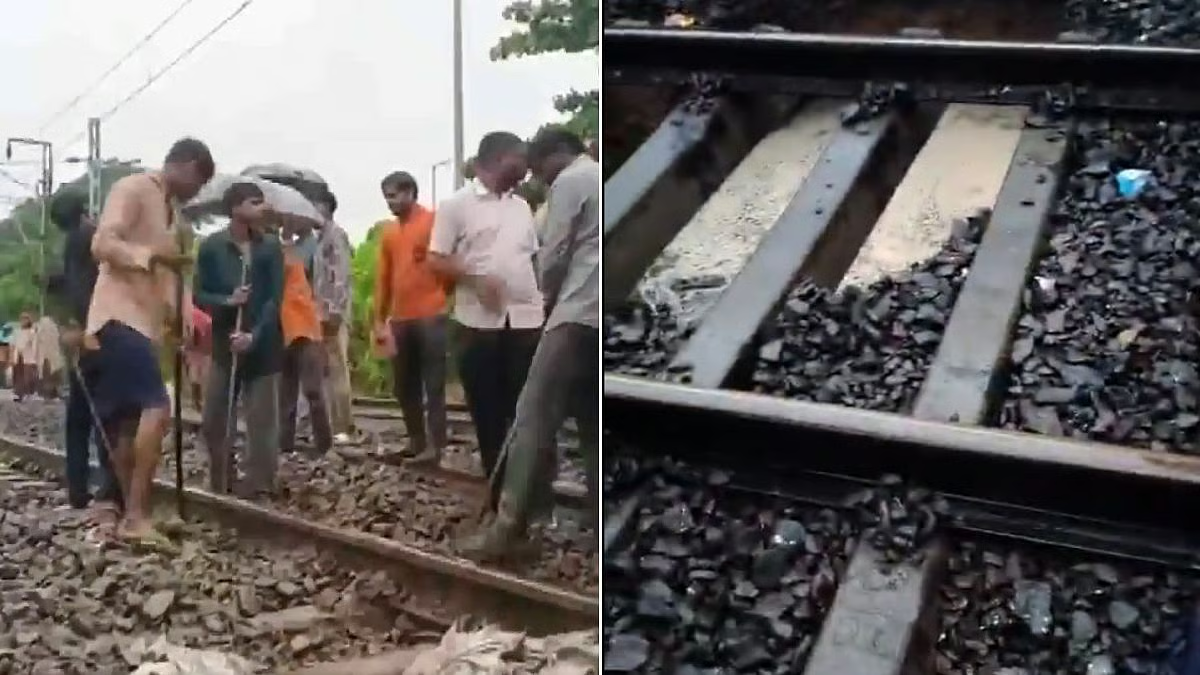
Mumbai: Suburban train operations on Central Railway’s Trans-Harbour corridor faced disruptions on Wednesday morning following a track cave-in. The structural failure, brought on by relentless heavy rainfall and subsequent intense water runoff, occurred on the stretch connecting the Turbhe and Koparkhairane stations.
While emergency engineering teams managed to restore the damaged tracks within a few hours, precautionary speed limits placed on the repaired section resulted in ongoing transit delays for commuters traveling between Thane, Vashi, Nerul, and Panvel.
Early Morning Structural Damage and Rapid Restoration
According to statements from railway authorities, the track bed became unstable after being compromised by a heavy volume of rushing stormwater. The Up line was officially declared unsafe for transit at 5:06 AM, followed shortly by the Down line at 5:50 AM.
Central Railway immediately dispatched repair crews to the location to initiate priority restoration works. The lines were progressively cleared for traffic later that morning; the Up line was certified operational at 7:27 AM under a strict 10 kmph speed restriction, while the Down line was re-opened at 7:35 AM with a permitted speed limit of 30 kmph.
Impact on Peak-Hour Commuters and Network-Wide Delays
As reported by The Free Press Journal, the incident directly impacted the morning rush-hour traffic, extending travel times by 15 to 20 minutes across the Trans-Harbour network. Railway officials clarified, however, that complete suspension of services was avoided, as trains continued to navigate the corridor throughout the emergency repair window.
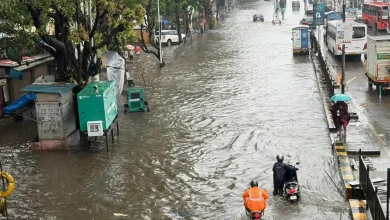
The severe weather pattern across the broader Mumbai Metropolitan Region created a cascading effect across alternative rail corridors as well:
- Central Railway: Mainline services operated between 20 to 25 minutes behind schedule.
- Harbour Line: Commuters experienced transit delays ranging from 15 to 20 minutes.
- Western Railway: Precautionary speed limits and weather-related protocols resulted in minor delays of roughly 10 minutes.
Seasonal Infrastructure Challenges
This latest disruption underscores the persistent logistical and infrastructural vulnerabilities Mumbai’s sprawling suburban network experiences during the peak monsoon months, during which flash flooding and track bed shifting regularly threaten daily operations. Railway officials have since noted that the situation is fully stabilized, with scheduled operations steadily returning to their regular timetables.
Also Read: BJP Rethinks Alliance Strategy After Cross-Voting Hurts NDA In Karnataka
-
-

-
-