
Mumbai Air Pollution: BMC Unveils 2026 Action Plan With 10 Hotspots Per Ward and Stricter Dust Checks; Worli Records Poorest AQI at 169
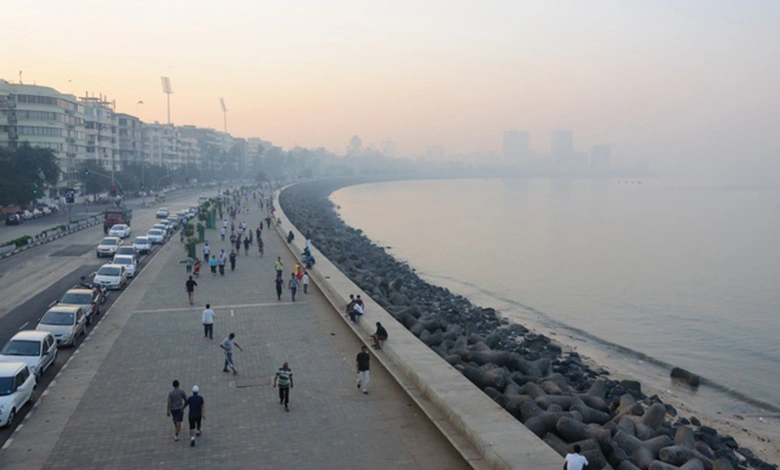
Mumbai, October 2, 2026: With post-monsoon construction activity picking up and the change in season leaving the air short on moisture, Mumbai’s Air Quality Index (AQI) is expected to deteriorate once again. To address this, the BMC has drawn up the “Air Pollution Control and Enforcement Action Plan-2026” to tackle major sources of pollution and step up action against violations across the city.
Under the plan, at least 10 air pollution hotspots will be identified in every ward, with updated lists and maps prepared for regular monitoring. The hotspot mapping will cover major construction and redevelopment projects, infrastructure works, open waste-burning sites, debris dumping locations and traffic congestion points. A designated officer will be made responsible for monitoring each hotspot.
The civic body will also take stringent action against violators of the 28-point guidelines for construction and demolition sites. On an immediate basis, a post-monsoon deep-cleaning drive of major roads and junctions will begin.
If the AQI at a monitoring station stays above 300 for three consecutive days, the plan provides for suspension of polluting activities within a 2-km radius of that station.



Mumbai’s AQI on October 2
As of October 2, Mumbai’s AQI stood at 110, a rise of 31 points within 24 hours. According to the CPCB’s Sameer App, some of the areas with the poorest AQI were Worli (169), Mazgaon (143), Navy Nagar-Colaba (142), Deonar (140) and Bhandup (125), among others. As per the app, only 19 of Mumbai’s 30 monitoring stations were active as of Friday evening.
Construction sites under tighter scrutiny
The civic body will enforce its existing 28-point guidelines at construction and demolition sites. Violating sites may face show-cause notices, stop-work orders and, where necessary, sealing action.
Each enforcement team has been directed to inspect at least two construction sites every day. Demolition sites will be required to have proper barricading, cover debris with tarpaulin or green cloth and carry out continuous misting to prevent dust emissions.
Post-monsoon deep-cleaning drive
To deal with accumulated mud, silt and dust after the monsoon, the BMC will carry out a Post-Monsoon Deep Cleaning Drive during the first two weeks of October. Major roads, medians, junctions and road edges will receive special attention, with recycled water or misting to be used wherever necessary.
Developers and contractors will also be responsible for maintaining adjoining roads, depending on the size of their projects. Projects up to 4,000 sq m must keep 100 metres of adjoining roads clean, those between 4,000 and 10,000 sq m must cover 200 metres, and projects exceeding 10,000 sq m will be responsible for cleaning roads up to 500 metres on either side.
Debris transport to be tracked
Vehicles carrying construction and demolition waste must be fully covered and have their wheels cleaned before entering public roads. The movement and disposal of debris will be monitored through the Mumbai Debris Control and Tracking System (MDCTS).
The BMC has also directed that ready-mix concrete (RMC) vehicles be operated in a manner that prevents concrete or other material from spilling onto roads.
Crackdown on waste burning and polluting vehicles
The civic body will step up action against open burning of waste in vacant spaces, using ward-level marshals and CCTV surveillance to identify violations.
Also Read:Israel Honors Indian Pilot Captain Smit Machchhar with Billboards in Mumbai
Special Pollution Under Control (PUC) checks will also be conducted on major traffic routes and congestion-prone stretches. Vehicles emitting visible smoke will face action under the applicable rules.
Measures to intensify when AQI rises
The BMC will continuously monitor the AQI and implement measures under the Graded Response Action Plan (GRAP) depending on the severity of pollution.
If the AQI crosses 200, additional measures such as intensive cleaning, road washing where required, water sprinkling, misting and stricter action against open waste burning will be undertaken.
Implementation of the action plan will be reviewed regularly at the ward level, with the civic administration instructed to take preventive and enforcement measures against major sources of air pollution.
The plan, issued under the guidance of Mayor Ritu Tawde, Deputy Mayor Sanjay Ghadi and Municipal Commissioner Ashwini Bhide, directs assistant commissioners of all administrative wards to ensure strict implementation of the measures.
Additional Municipal Commissioner (Eastern Suburbs) Dr Avinash Dhakane has directed civic officials to ensure necessary preventive and enforcement action against key pollution sources across Mumbai.