
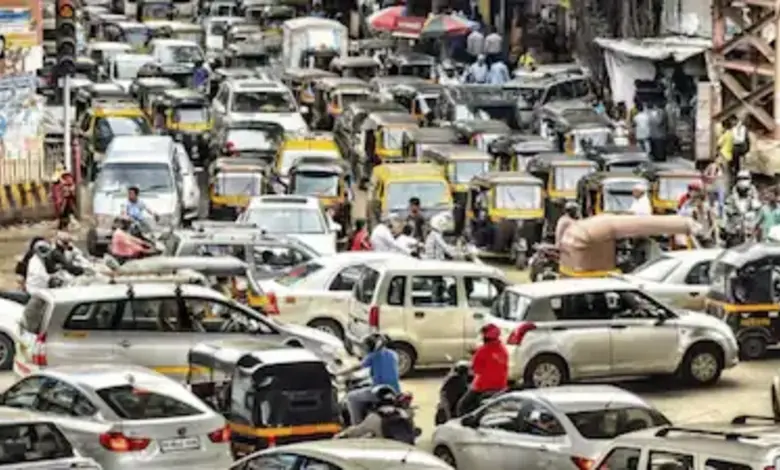
Mumbai’s Bandra Kurla Complex (BKC) is launching an innovative weekly measure to reduce traffic congestion and encourage sustainable commuting. From June 12, every Friday will be observed as ‘Public Transport Day’, prompting nearly 200,000 corporate professionals in the area to choose trains, metro, or buses instead of private vehicles. This represents the first focused attempt of its kind in a major business district.
The initiative has received in-principle support from around 90 companies and organisations in BKC. It is being rolled out by the Mumbai Metropolitan Region Development Authority (MMRDA) in partnership with BEST, Mumbai Metro Rail Corporation Limited (MMRCL), Traffic Police, auto-rickshaw unions, and WRI India.
Fridays were selected because work schedules tend to be more flexible towards the end of the week, making employees more receptive to trying alternative modes of transport. Mondays were avoided due to the typical time pressure commuters face at the beginning of the workweek. The MMRDA has also directed its own nearly 2,000 employees and contractual staff to participate.
The trial will be closely monitored for at least three to four months, with weekly reviews to identify challenges and make necessary adjustments. The decision follows recent surveys and stakeholder consultations, which indicated that 82% of commuters would be willing to switch to public transport if services were more reliable, convenient, and better integrated.



ALSO READ : Mumbai BEST Bus Crash Near Dadar’s Kotwal Garden Leaves One Dead, Several Injured
Commuters have highlighted key concerns, including last-mile connectivity from Aqua Line metro stations, inadequate pedestrian facilities within BKC, lack of shade for walkers, and infrequent BEST bus services. Many noted that while exiting metro stations is quick, arranging shared autos or feeder buses for the final one to two kilometres remains a major challenge.
Officials have pointed out that poor last-mile connectivity is the reason 52% of those heading to BKC still rely on personal cars, taxis, and auto-rickshaws. Only 25% currently use public transport, while more than half the workforce endures daily commutes longer than two hours. Discussions with auto-rickshaw unions are underway to support the plan.
To tackle these issues, authorities and partner agencies are collaborating with BKC companies on both immediate and long-term solutions. Proposals include dedicated turning bays for BEST buses at major junctions and opening internal office campus roads to pedestrians for shorter routes. Urban mobility experts stress the need to improve walkability in BKC, which features large concrete areas and limited greenery, making walking uncomfortable in the city’s heat.
Longer-term plans involve creating shaded pedestrian corridors, increasing tree cover, and enhancing connections between metro stations and workplaces, including all-weather footpaths with overhead plant shades and mist blowers.
Incentives such as rewards for regular public transport users, recognition programmes, and travel expense reimbursements are also under discussion to encourage behavioural change. Officials have emphasised that meaningful progress begins at the individual level, with teams committing to use public transport on Fridays to help reduce congestion and emissions.
The initiative has been welcomed for its potential to increase public transport adoption and improve walking infrastructure through safer crossings, better corridors, and greater comfort.