New York : US President Donald Trump appears to have borrowed an electoral strategy from India to ease the political pressure caused by the Iran war. The strategy Trump turned to looks familiar to anyone who has followed Indian elections. Trump has adopted the tried-and-tested formula from the Indian electoral playbook, the revdi (freebie) promises.
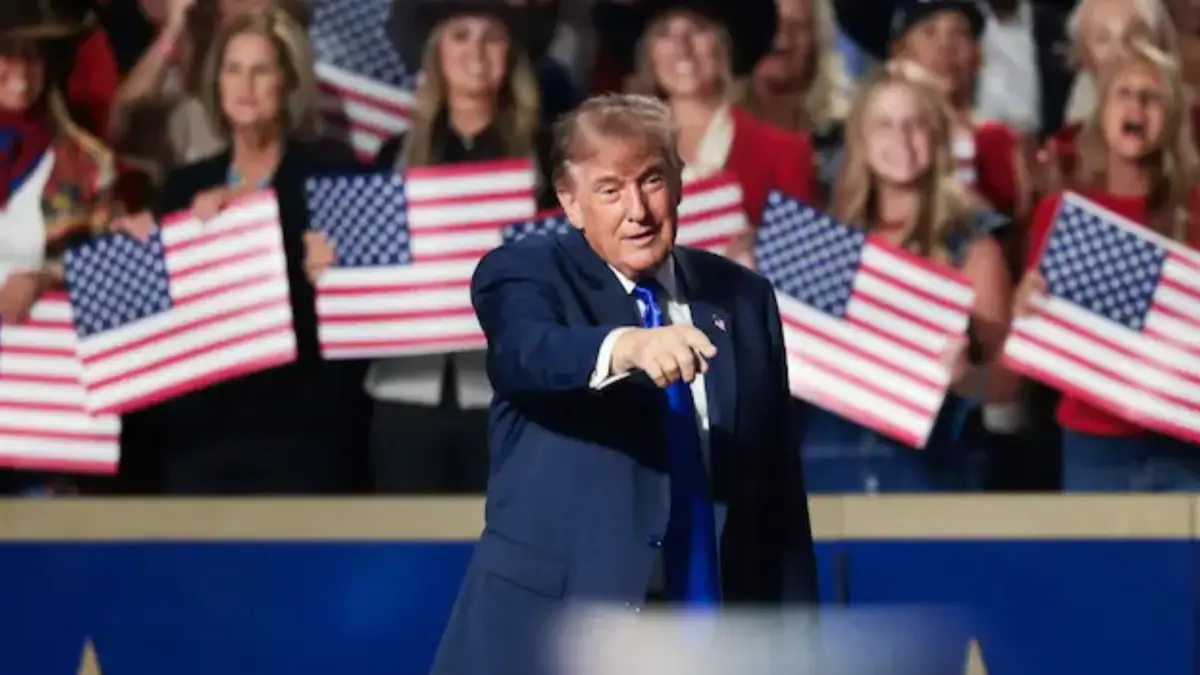
The 80-year-old US President promised that every American adult could receive a $5,000 “dividend”. But Trump has attached one important condition to the promise. He said Republicans must retain control of both the House of Representatives and the Senate in November’s midterm elections. The US President made the promise during a 100-minute speech at the Republican midterm convention in Dallas on Wednesday. He offered few details on how the payments would be financed or administered.
For a president whose approval ratings remain under pressure in the US despite recent tax cuts and refunds, the Indian formula could prove to be an elixir. India’s revdi politics did not begin with cash transfers or smartphones. Its roots are traced to Tamil Nadu in the 1950s and 1960s, when welfare measures increasingly became part of electoral politics and free schemes actually meant welfare-oriented promises.
The real transformation came in the 2006 Tamil Nadu election. M Karunanidhi’s DMK promised free colour televisions, subsidised rice, gas stoves, land and other benefits. The AIADMK and DMK then intensified their competition in 2011, with promises ranging from mixers and grinders to fans, laptops and marriage assistance. Competitive freebies had become a feature, and spilled out of Tamil Nadu. The Arvind Kejriwal-led Aam Aadmi Party (AAP), which was two years old then, in its 2015 Delhi campaign, floated freebies like subsidised electricity and water.
Read Also : Eknath Shinde Receives Commonwealth Public Leadership Award at British Parliament
-

-

-

-