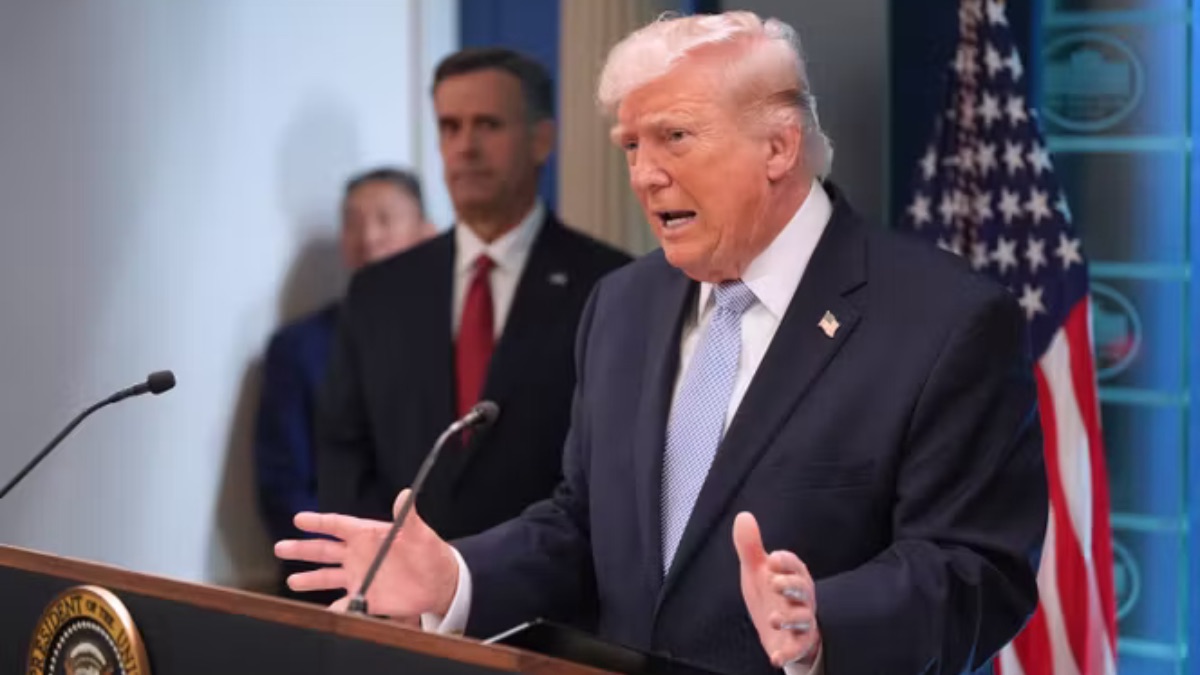
Washington: US President Donald Trump stated on Wednesday that King Charles III concurs with the position that Iran must not be allowed to develop a nuclear weapon, comments made during the British monarch’s state visit to the United States. Addressing Congress, King Charles called on Washington to maintain a strong stance alongside its Western allies amid a period of “great uncertainty,” highlighting conflicts spanning Europe to West Asia and their broad societal repercussions. Trump has previously voiced criticism of the United Kingdom over what he perceives as inadequate backing in the ongoing conflict with Iran.
Peace efforts between the United States and Iran appeared stalled on Tuesday, with Trump voicing frustration over Tehran’s most recent offer. Iranian officials proposed delaying talks on its nuclear programme until after the conflict concludes and maritime issues are settled. However, the US president has maintained that nuclear concerns must be tackled immediately.
A US official confirmed this stance was reinforced during Trump’s meeting with advisers on Monday. White House spokeswoman Olivia Wales emphasised that Washington’s “red lines” have not shifted as it works toward ending the war, which erupted in February in coordination with Israel.
ALSO READ : Gold and Silver Prices Plunge Sharply in India
On Truth Social, Trump posted: “Iran has just informed us that they are in a ‘State of Collapse’. They want us to ‘Open the Hormuz Strait,’ as soon as possible, as they try to figure out their leadership situation (Which I believe they will be able to do!). Thank you for your attention to this matter!”
The message reflects Tehran’s apparent urgency to restore shipping access through the strategically vital Strait of Hormuz while addressing internal leadership challenges.
In a related development, The Wall Street Journal reported, citing US officials and relayed by Reuters, that Trump has instructed his team to ready plans for an extended blockade of Iran. In recent discussions, the president reportedly favoured intensifying economic measures by limiting maritime traffic to and from Iranian ports, particularly to curb the country’s oil exports. He assessed that options like renewing airstrikes or withdrawing from the conflict carried higher risks than maintaining the blockade.
Separately, in southern Lebanon, the health ministry reported that Israeli strikes on Tuesday killed eight people, including civil defence workers, and injured two soldiers, despite a ceasefire agreement in place. Israel has been engaged in hostilities with Hezbollah since early March, with sporadic clashes persisting even after a fragile truce was declared on April 17.
As diplomatic channels remain deadlocked, the situation continues to influence global energy markets, with tensions around key maritime routes such as the Strait of Hormuz contributing to volatility in oil prices. No immediate breakthroughs were reported in efforts to revive direct US-Iran negotiations, including any potential involvement of intermediaries like Pakistan or figures such as Abbas Araghchi..