US military contingency planning for potential strikes on Iran has reached an advanced stage, with options that include targeting specific leaders and pursuing regime change in Tehran, according to two US officials who spoke to Reuters on condition of anonymity.
These preparations signal that Washington is readying for a possible large-scale confrontation with Iran should ongoing diplomatic efforts collapse. Reuters previously reported that the US military is preparing for a sustained operation—potentially spanning weeks—that could involve strikes on Iranian security facilities and nuclear infrastructure.
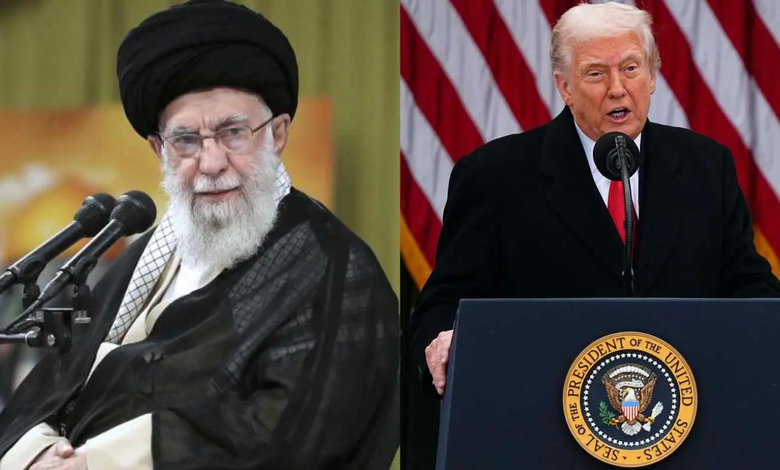
The more detailed and ambitious options now under discussion reflect heightened planning as President Donald Trump considers his course of action. In recent public comments, Trump has explicitly raised the prospect of regime change in the Islamic Republic.
The officials offered no specifics on potential individual targets or the precise methods for achieving regime change without a major ground invasion—an approach that would diverge from Trump’s earlier campaign promises to avoid the interventionist policies of past US administrations in countries such as Afghanistan and Iraq.
Trump has positioned substantial military assets in the Middle East, primarily naval vessels and fighter aircraft, with possible reinforcement from long-range bombers based in the United States.
During his first term, Trump authorized the 2020 drone strike that killed Iranian General Qassem Soleimani, head of the Islamic Revolutionary Guard Corps’ Quds Force. His administration also designated the IRGC a foreign terrorist organization in 2019—the first such designation applied to an entire national military.
One official pointed to Israel’s effectiveness in targeting Iranian commanders during its 12-day conflict with Iran last year, when at least 20 senior figures, including armed forces chief Major General Mohammad Bagheri, were reportedly killed. The official described the approach as demonstrating the value of disrupting IRGC command structures, though it requires precise intelligence on locations and careful assessment of collateral risks.
It remains unclear what current US intelligence reveals about the locations of potential high-value Iranian targets.
Neither the White House nor the Pentagon immediately responded to requests for comment.
Trump has repeatedly mentioned regime change as a possibility, stating last week that it “seems like that would be the best thing that could happen” for Iran, while indicating that “there are people” who could assume power—without identifying them.
While regime change has historically involved large-scale troop deployments, Trump recently used special operations forces in Venezuela to capture President Nicolas Maduro from his residence.
At the same time, Trump has maintained diplomatic channels, warning Thursday of “really bad things” if no agreement is reached and suggesting a possible 10- to 15-day window before potential action.
Iran’s Revolutionary Guard has threatened retaliation against US bases in the region if strikes occur. In a letter to UN Secretary-General Antonio Guterres, Tehran stated it would not initiate hostilities but would respond decisively and proportionately to any aggression in self-defense.
US officials anticipate Iranian counterattacks, which could cause American casualties and risk wider regional escalation due to Iran’s missile arsenal.
Trump’s rhetoric has contributed to rising oil prices, while a Russian warship recently participated in Iranian naval exercises in the Gulf of Oman—a key global energy route.
Iran has previously threatened to close the Strait of Hormuz in response to attacks, potentially disrupting one-fifth of worldwide oil transit.
Recent US-Iran talks produced agreement on basic guiding principles, according to Iranian Foreign Minister Abbas Araqchi, though White House statements indicate significant remaining differences. Iran is preparing a written proposal to address US concerns about its nuclear program, which it insists is peaceful.
Trump reiterated Wednesday that Iran must forgo any nuclear weapons path for peace to prevail in the region.