
US Asked Regional Countries To Warn Iran Of Possible Israeli Plot Against Senior Officials
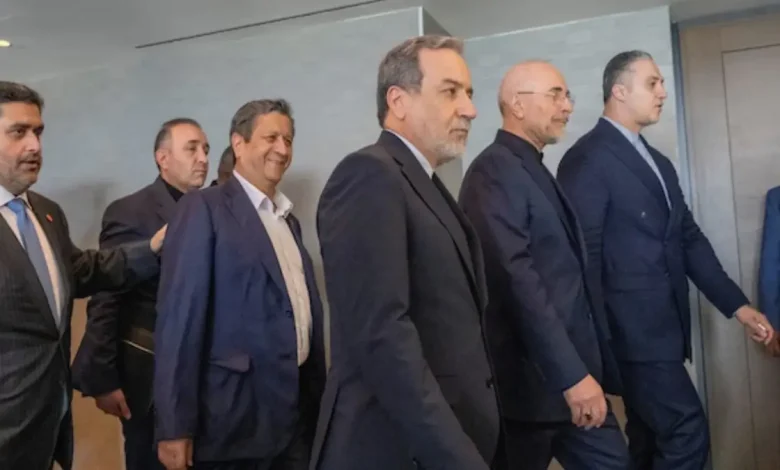
New York : The United States asked several Middle Eastern countries to warn Iran that Israel might try to assassinate senior Iranian leaders, according to a report by The New York Times. Washington feared such attacks could destroy the ceasefire talks that began in early April. The two main officials at risk were Iranian Foreign Minister Abbas Araghchi and Parliament Speaker Mohammad Bagher Ghalibaf.
Israel had considered targeting senior Iranian leaders from the very beginning of the conflict. During the most intense period of fighting, US officials said Araghchi and Ghalibaf could have been seen by Israel as legitimate targets in its effort to weaken or topple Iran’s hardline government. But once peace talks started in April, the US became worried that any attack on them would ruin the process.
The attack reportedly used US intelligence support. While the United States mainly targeted Iran’s navy and missile forces, Israel focused heavily on Iran’s top leadership and tried to kill as many senior officials as possible. Among those killed were Ali Larijani, Iran’s top national security official, and Kamal Kharazi, a former foreign minister. Both were seen as relatively pragmatic leaders and were considered possible figures with whom the Trump administration could negotiate.
They were killed in Israeli airstrikes while they were involved in talks with the United States. US fears that Israel might also target Araghchi and Ghalibaf showed how quickly Washington and Tel Aviv’s goals had started to differ, even though they appeared united at the beginning of the war. The United States wanted a peace deal, but Israel was sceptical even when the first ceasefire was announced in April. The conflict appears to have made it even more hardline. The Islamic Revolutionary Guards Corps has also strengthened its hold over the country.




In June, Washington and Tehran reached a framework agreement to reopen the Strait of Hormuz and lay the ground for future talks on Iran’s nuclear programme. Israeli officials and commentators reportedly viewed that preliminary deal as a major setback because it did not meet Israel’s larger war goals, such as regime change in Iran, weakening Tehran’s proxy groups and severely damaging its missile programme.
Ghalibaf has reportedly escaped death twice since 2025 — once during last year’s 12-day war and again after this year’s conflict began. On both occasions, officials told The New York Times that he was rescued from under rubble. The latest threat reportedly came when Ghalibaf was flying back to Tehran after talks with US Vice President JD Vance. Iranian intelligence is said to have intercepted information suggesting Israel planned to target his aircraft. Two Israeli fighter jets had allegedly entered Iranian airspace, according to the report.
The plane then made an emergency landing in Mashhad, near Iran’s border with Pakistan, and Ghalibaf later travelled by road to Tehran. Despite these threats, Iranian officials have continued to travel for diplomacy. In May, both Ghalibaf and Araghchi travelled to Qatar and later to Switzerland for peace talks.
Read Also : Mojtaba Khamenei Unlikely to Attend Ayatollah Ali Khamenei’s Funeral Due to Security Concerns, Says Aide