
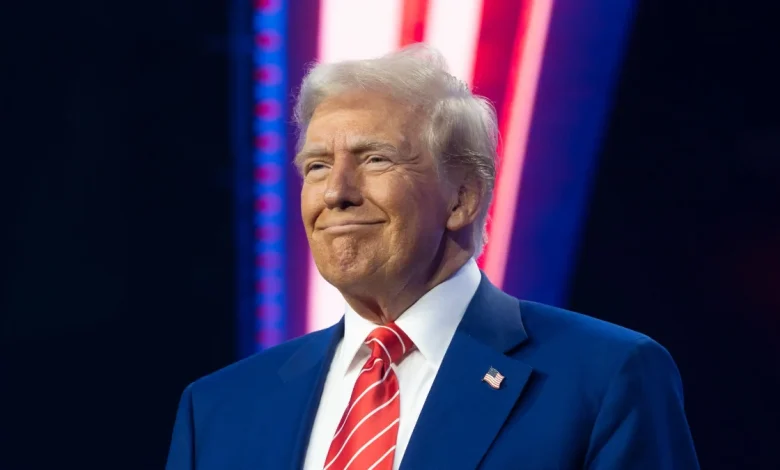
Indian exporters welcomed temporary relief as U.S. additional tariffs on their shipments fell to 10% starting Monday, down from the 25% rate imposed earlier this month. Despite the reduction, persistent uncertainty stemming from President Donald Trump’s shifting trade stance continues to unsettle the sector.
The change came after the U.S. Supreme Court invalidated Trump’s prior use of reciprocal tariffs. In response, the administration turned to Section 122 of the Trade Act of 1974, citing balance-of-payments issues, to impose the 10% extra duty—a measure capped at 150 days.
Trump indicated early Saturday that he intends to raise the rate to 15%, though no executive order has been signed yet. On Monday, U.S. Customs and Border Protection informed shippers of the current 10% level. A White House official, quoted by Reuters, confirmed Trump’s unchanged commitment to the 15% target without elaborating further.
Industry voices reflected cautious relief alongside ongoing concern. Sabyasachi Ray, executive director of the Gem & Jewellery Export Promotion Council, urged patience amid volatility: “Let things stabilise, there are a lot of ifs and buts. There is a lot of uncertainty.” He stressed the need for clarity on diamonds, which have received differential treatment in trade pacts with the UK and EU.

ALSO READ : Trump Warns Nations: “Play Games” With Court Ruling And Face Steep Tariff Hikes
Policy reversals caused immediate disruptions. Some diamond shipments faced delays because even U.S. customs officials lacked clarity on the applicable rate. A Mumbai-based exporter reported sending consignments despite the elevated duty, noting, “Even the US customs didn’t know what the final levy was. So, we sent some stuff today, but the duty is quite high.”
For jewellery, the additional 10% stacks atop the standard 5.5% most-favoured-nation (MFN) tariff applied uniformly. In comparison, certain Chinese products carry 25% extra duties under Section 301 provisions.
The drop brings welcome respite to broader exporters, who previously contended with tariffs as high as 50% in some instances—including a now-lifted 25% penalty tied to Indian refiners’ Russian oil purchases. An interim bilateral trade framework had projected a decline to 18%, rendering the 10% rate comparatively advantageous.
Ajay Sahai, director general of the Federation of Indian Export Organisations (FIEO), acknowledged the 10% levy as a challenge but far preferable to earlier burdens. “The 10% US tariff, though a concern, is significantly lower than the higher duties Indian exporters have faced earlier, placing them in a relatively better position,” he said. Uniform application across nations helps preserve competitiveness, aided by favorable exchange rates.
Certain categories, including pharmaceuticals and electronics, avoided extra tariffs during the reciprocal period. However, steel, aluminium, automobiles, and auto parts remain subject to 50% product-specific duties under Section 232.
Refunds for any overpaid duties represent a major unresolved issue. Pankaj Chadha, chairman of EEPC India, highlighted the uncertainty: “The million-dollar question now is on refunds and if we will ever be able to get it.” Even if granted, exporters may struggle to recoup funds from buyers absent prior contractual provisions.
While the current lower rate offers short-term breathing space, exporters remain watchful as policy fluctuations persist.