President Donald Trump isn’t done fighting this battle. On Thursday, he signed two separate executive orders aimed at narrowing who qualifies for automatic US citizenship at birth his second major swing at the issue since the Supreme Court struck down his first attempt just weeks ago.
What the New Orders Actually Do
The two orders tackle the issue from different angles. The first identifies specific categories of people whose children would not be entitled to birthright citizenship including so-called “alien enemies,” members of foreign terrorist organizations, people who lobby or act on behalf of foreign governments, and, per the White House’s own framing, children of certain diplomatic staff. The second order goes after commercial “birth tourism” directly, delegating authority to the Secretary of State and the Secretary of Homeland Security to restrict visas for people whose primary purpose in travelling to the US is to give birth there.
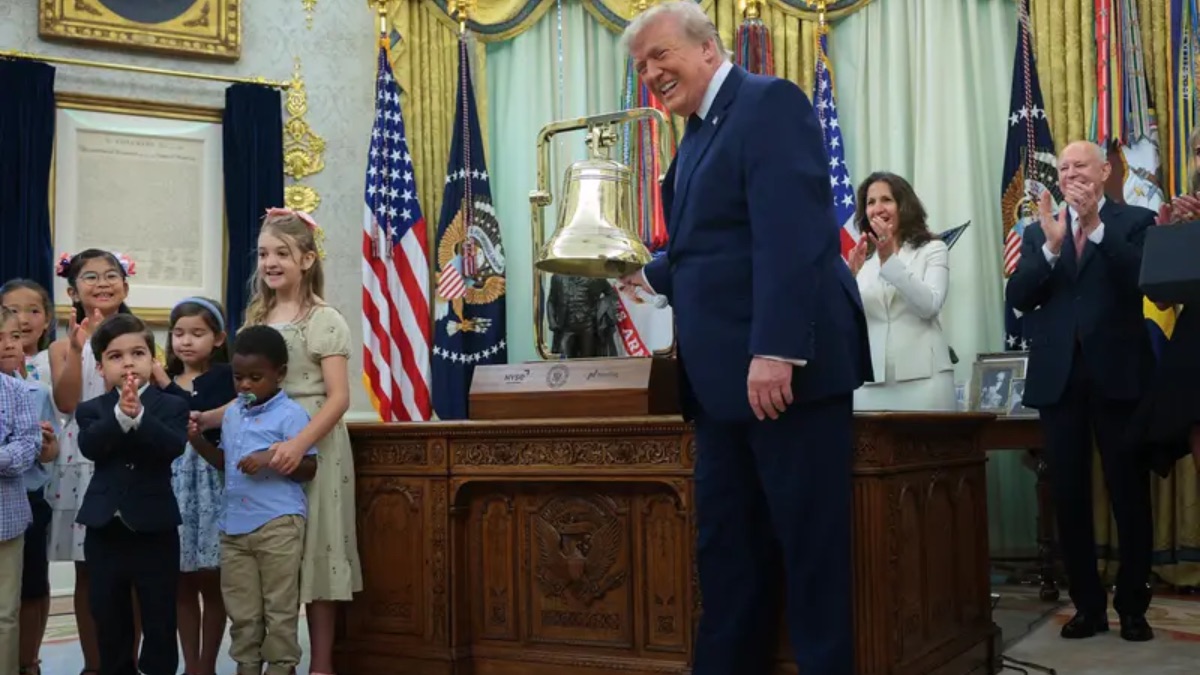
Speaking in the Oval Office, Trump didn’t hold back on how he sees the practice. “They’ve taken birthright citizenship, and they’ve made a joke out of it,” he told reporters. “We’re making adjustments because it’s very unfair.” He went further, framing it as an industry that’s sprung up around the loophole: “They’re building businesses around birthright citizenship… It’s a disgrace. They’re buying their way in, and we’re not going to let it happen.” He also promised “very big crackdowns” on organized birth tourism operations specifically.
Also Read:At least 2 killed 15 injured in Shooting at Debsirin Nonthaburi school Near Bangkok
White House deputy chief of staff Stephen Miller, who has been the chief architect behind the administration’s immigration agenda, laid out the scope more precisely. He said the birthright order would cover children of members of “foreign terrorist organizations” and “large categories of people who lobby and act on behalf of foreign governments,” describing the goal as making sure that “large numbers of people who wrongly (would) be getting birthright citizenship will no longer be eligible for those benefits.”
Why This Keeps Coming Back to the Constitution
Birthright citizenship is written directly into the 14th Amendment, which states that “all persons born or naturalised in the United States, and subject to the jurisdiction thereof, are citizens of the United States.” It’s about as settled a piece of constitutional text as exists in American law — but it has never been entirely without exception. Children born to foreign diplomats, for instance, don’t automatically become US citizens, because their parents aren’t considered subject to US jurisdiction in the legal sense the amendment requires. US immigration law also already permits consular officers to deny a visa outright if they suspect someone’s real reason for visiting is to give birth on American soil.
Also Read:Watch: Will Jacks Takes Stunning Boundary-Line Catch In The Hundred, Leaves Fans In Awe
A Second Attempt After a Supreme Court Loss
This isn’t Trump’s first run at this. On his first day back in office, he signed an executive order attempting to deny automatic citizenship to children born to parents who were undocumented or in the country on temporary visas. Lower courts blocked it almost immediately, and on June 30, the Supreme Court ruled against the administration in Trump v. Barbara, reaffirming that the Constitution extends citizenship to children born to parents in the US “for whom no extraterritorial fiction applies.” Trump called the ruling “very unfortunate” at the time.
His administration’s core argument hasn’t changed much since then: that the 14th Amendment, ratified after the Civil War, was written to guarantee citizenship for formerly enslaved people not, in the administration’s reading, for the children of undocumented immigrants or short-term visa holders.
This time around, the administration appears to be threading a narrower needle. Rather than challenging the broad constitutional principle head-on again, these two new orders lean on the “historically recognized exceptions” the Supreme Court itself acknowledged in its June ruling the same logic that already excludes children of diplomats. Whether that framing holds up is very much an open question. Legal experts have already pointed out that if birth tourism specifically is the real target, the tools to address it like the existing visa-denial authority for consular officers — already exist under current law, raising doubts about how much these new orders actually change on the ground. Given the fate of Trump’s last attempt, this one is almost certainly headed for a court challenge of its own.
-

-

-

-