
Tarique Rahman Says ‘Interest of Bangladeshi People Comes First’ on India Ties After BNP’s Landslide Victory in Bangladesh Elections
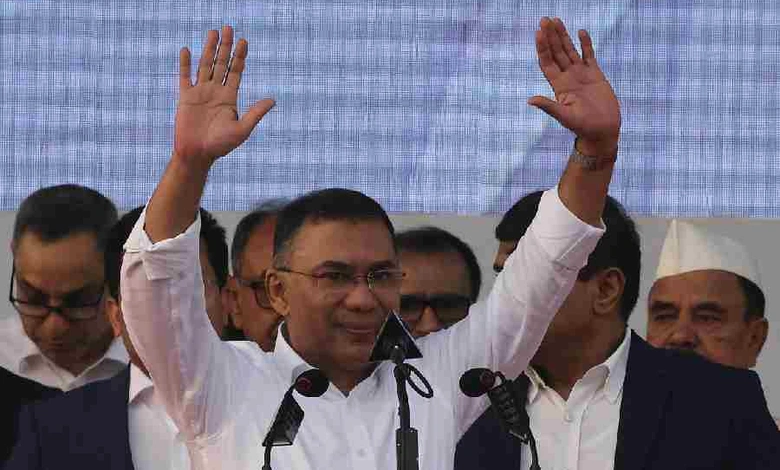
Bangladesh’s incoming Prime Minister Tarique Rahman has declared his commitment to prioritizing Bangladeshi interests in shaping the nation’s foreign policy, particularly concerning relations with India. Following his Bangladesh National Party’s sweeping electoral triumph, Rahman emphasized that “the interest of the Bangladeshi people comes first” in determining diplomatic ties.
In his maiden address after the electoral victory, Rahman proclaimed, “From today we are free” and highlighted that the country has “paved the way for democracy.” He urged citizens and political figures to “remain united,” expressing his conviction that “national unity is our collective strength.”
“This victory belongs to Bangladesh, belongs to democracy; this victory belongs to the people who aspired to and have sacrificed for democracy,” Rahman declared in his first post-election speech. Addressing foreign relations, he clarified that Bangladesh’s diplomatic approach will center on national priorities.
“We have cleared ourselves regarding the foreign policy, which is in the interest of Bangladesh, and the interest of the Bangladeshi people comes first. By protecting the interests of Bangladesh and the Bangladeshi people, we will decide our foreign policy,” Rahman explained when questioned about his party’s diplomatic agenda.


The Bangladesh National Party secured a decisive mandate in the 13th general elections, capturing 207 seats in the 300-member Jatiya Sangsad, the Parliament of Bangladesh. The Islamist Jamaat-e-Islami won 69 seats, marking its largest parliamentary representation ever.
Tarique Rahman, son of the late BNP leader Khaleda Zia, had only returned to Bangladesh in December following 17 years of exile in Britain. His electoral success came after the controversial elections held following former Prime Minister Sheikh Hasina’s removal in a violent uprising in 2024, which concluded her 15-year tenure. The Interim Government under Muhammad Yunus prohibited Hasina’s Awami League from participating in the elections and engaging in political activities.
Rahman’s father, President Ziaur Rahman, was assassinated in 1981, while his mother, Khaleda Zia, held the prime ministerial office for three terms and remained a dominant force in national politics for decades.
Acknowledging the difficulties facing his forthcoming administration, Rahman noted, “We are about to begin our journey in a situation marked by a fragile economy left behind by an authoritarian regime, weakened constitutional and structural institutions, and a breakdown of law and order.”
He struck a reconciliatory note with opposition parties, saying, “Your ideas and perspectives are important to us in the nation-building process,” while adding that, “Our paths and opinions may differ, but in the interest of the country, we must remain united.”
The BNP leader pointed out that “A total of 51 political parties participated in this election, including Jamaat-e-Islami, NCP, Islami Andolon Bangladesh, Jamiat Ulema-e-Islam, and Gono Odhikar Parishad, among others,” defending the election’s legitimacy and broad participation amid criticism over the Awami League’s exclusion from the polls.