
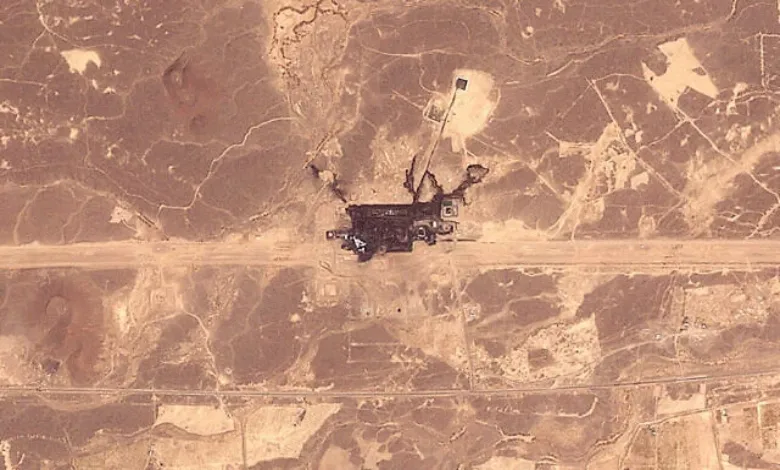
As the Middle East crisis intensifies, Saudi Arabia has shut down a vital oil pipeline after drones fired from Iraq targeted it. After acknowledging that one of its provinces bordering Iran was the source of the drone attack on its neighbor’s East-West pipeline, Iraq announced it had sacked a military officer and opened an investigation.
The biggest exporter of crude oil in the world, Saudi Arabia, has been able to avoid the Strait of Hormuz thanks to the 1,200 km pipeline.
As the US-Iran war enters its seventh month, the incident coincides with a significant advance by the Iranian-backed Houthi rebels in Yemen, increasing pressure on international oil transportation lanes.
As satellite photos of the area showed smoke and charred ground, Riyadh announced on Friday that it had closed the pipeline as a precaution.




According to the foreign ministry, the incident caused some damage and injuries, which were still being evaluated.
According to news agency Reuters, which cited ship tracking firms and analysts, the pipeline has been transporting 4% to 5% of the world’s oil supply.
Following a request from the prime minister of Iraq, Saudi Arabia has decided not to reciprocate at this time, according to its foreign ministry.
“The Kingdom of Saudi Arabia affirms that it reserves its right to take all necessary measures to safeguard its sovereignty and security, protect its facilities, and ensure the safety of its citizens and residents,” the statement continued, adding that the kingdom would “support the efforts of the Iraqi government” to “prevent attacks” launched from the country against neighboring states.
The Iraqi prime minister’s office also stated that the operations commander in the Maysan governorate, a province that borders Iran, had been removed from his position after it was confirmed that the drone attack had originated there.
“This attack represents a dangerous escalation and an unacceptable threat to the security of the Kingdom of Saudi Arabia, its territorial integrity, and its vital installations, as well as a flagrant violation of the principles of international law,” said secretary general Jasem Mohamed Albudaiwi of the Gulf Co-operation Council, which is composed of representatives from Saudi Arabia, the United Arab Emirates, Bahrain, Oman, Qatar, and Kuwait.
Houthi militants have also taken control of a large portion of Yemen’s coastline this week, according to sources.
Although it states that marine travel is “safe for all companies except for Saudi vessels,” the organization asserts sovereignty over the Bab al-Mandab Strait, which serves as the entry point to the Red Sea and the Suez Canal.
Crude oil prices have surpassed $100 per barrel for the first time since July as a result of the developments that have put pressure on both sides of the Arabian Peninsula.
Also Read – “Bound To Honour Our Pact”: Pakistan On Houthi Attack In Saudi