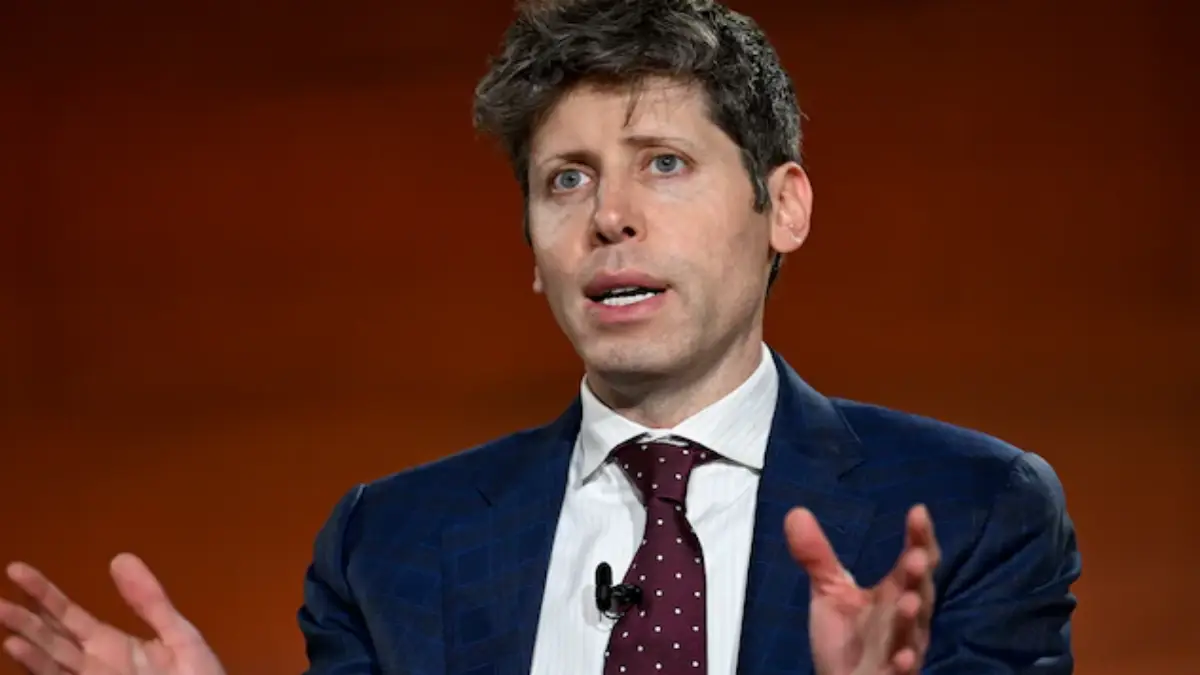
OpenAI CEO Sam Altman said on Tuesday (May 26) that fears of an AI-driven collapse in white-collar employment may have been overstated, acknowledging that his earlier predictions about large-scale job losses have not materialised as quickly as he had expected.
Speaking at a conference organised by the Commonwealth Bank of Australia in Sydney, Altman reflected on how his views on AI’s employment impact have shifted since the launch of ChatGPT in 2022.
“I’m delighted to be wrong about this,” Altman said. “I thought there would have been more impact on entry-level white-collar jobs being eliminated by now than has actually happened.”
Why his thinking changed
Altman said he had initially expected AI to rapidly replace a large number of routine office roles, but came to realise that people place greater value on direct human interaction than many in the technology sector had anticipated.
He offered a personal example: he once experimented with using AI to handle replies to Slack and email messages, labelled “this is Sam’s AI,” before eventually returning to responding to some messages himself. “We really do care about people,” he said, adding that software still struggles to fully replicate human connection and communication.
Altman said AI is more likely to reshape work than eliminate the need for humans altogether, with people continuing to play important roles in creativity, communication, judgment, and emotional understanding as AI systems advance. “I don’t think we’re going to have the kind of jobs apocalypse that some of the companies in our space advocate or talk about,” he said.
A shift from earlier warnings
Altman’s remarks mark a notably softer tone compared to previous statements. In a 2023 interview with The Atlantic, he said “jobs are definitely going to go away” as businesses adopted AI, though he argued better jobs would eventually emerge. Last year, he told a Federal Reserve conference that “entire classes” of jobs could disappear.
The broader picture
His comments come as concerns over AI-driven restructuring continue to grow across the global technology sector. Major companies have been increasing investments in AI infrastructure while simultaneously cutting workforces. According to layoff tracker TrueUp, more than 144,000 technology workers have lost their jobs globally so far in 2026. Meta announced plans to cut around 8,000 jobs this year as part of its AI restructuring strategy, with additional layoffs expected later in the year.
-

-

-

-