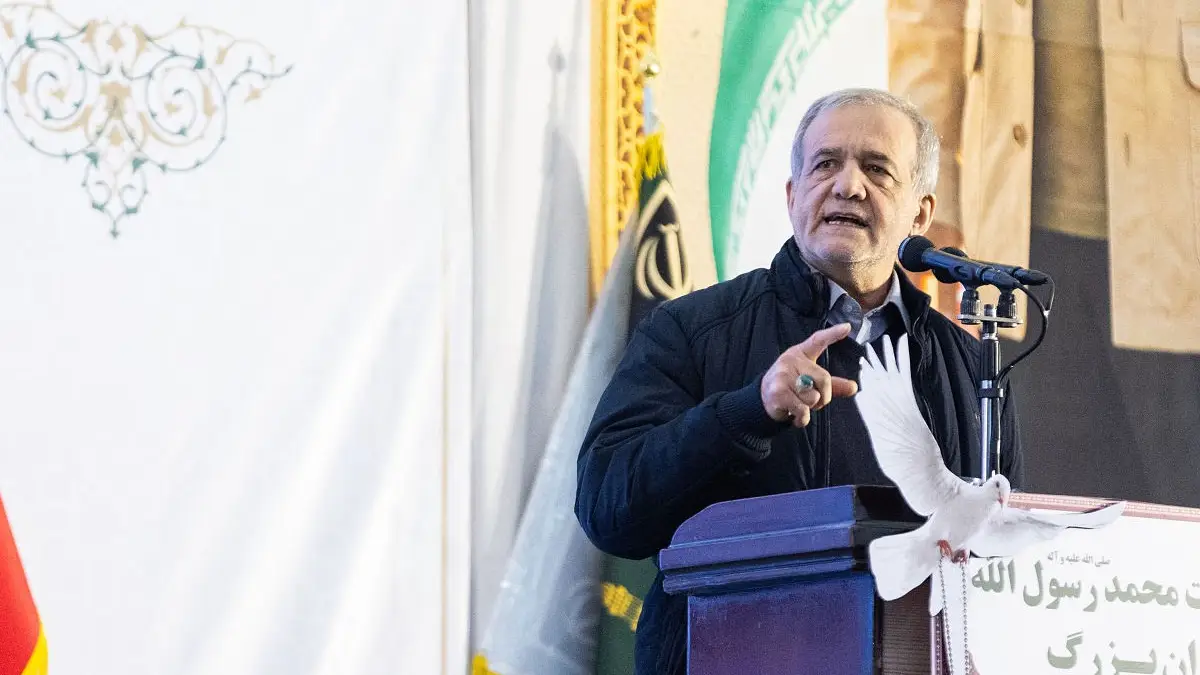
Iranian President Masoud Pezeshkian has said negotiations to end the Middle East war have little chance of succeeding unless Washington drops pressure and threats. Efforts to break the months-long stalemate have so far failed. Speaking on Friday (Oct 9) at a summit of the Commonwealth of Independent States (CIS) in Turkmenistan, he said any diplomatic process must rest on mutual respect rather than coercion.
“Dialogue holds meaning and a chance of success only when based on mutual respect and mutual commitments, and when devoid of pressure and threat,” he said.
He added, “Negotiation conducted in the shadow of force is not negotiation, it is imposition and coercion.”
Pezeshkian also warned that sanctions on Iran would have consequences for the wider region, affecting “regional trade, connectivity, energy, and order.”
Tehran questions the value of negotiations
The remarks come after Pezeshkian criticised talks with the United States earlier this week. On Monday (Oct 5), he called the negotiations worthless, saying diplomacy had not prevented further attacks.
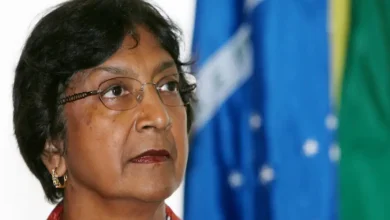
Also Read:Indian-Origin Jurist Navanethem Pillay Honoured With 2026 Nobel Peace Prize
“With an enemy that everyday resorts to assassination, sanctions, pressure and threats, and that breaks its commitments, negotiations are meaningless,” he said.
Background to the conflict
The conflict began in late February with US and Israeli attacks on Iran, at a time when Washington and Tehran were negotiating over Iran’s nuclear programme. A memorandum of understanding reached in June set out a framework for a lasting settlement, but it did not bring a permanent end to hostilities, and talks have remained stalled. Recent indirect discussions between the two sides on the sidelines of the United Nations General Assembly also produced no breakthrough.
Strait of Hormuz remains a major flashpoint
The dispute has increasingly centred on the Strait of Hormuz, a vital shipping route whose closure sent shockwaves through global energy markets. Iran has sought to control the waterway and has attacked vessels that try to pass without its authorisation. The United States has responded with a counterblockade of Iranian ports and strikes on vessels it accuses of violating the restrictions.
Washington and Israel have maintained that their military campaign is meant to stop Iran from acquiring nuclear weapons. Tehran has repeatedly denied seeking to develop them.
With military operations giving way, in part, to economic pressure, Pezeshkian’s latest comments show how far apart the two sides remain on the conditions for peace.