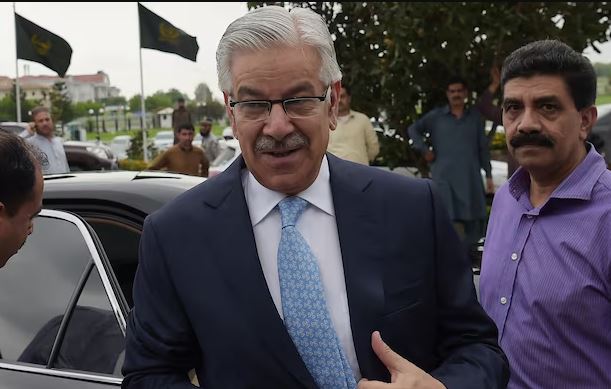
Pakistan has ruled out joining the Abraham Accords after US President Donald Trump called on several Muslim-majority nations, including Pakistan, to normalise ties with Israel as part of a broader regional arrangement tied to ongoing Iran negotiations.
Defence Minister Khawaja Asif said on Monday that Islamabad would not support any agreement conflicting with the country’s “fundamental ideologies,” reiterating Pakistan’s long-standing position that it will not recognise Israel without the establishment of an independent Palestinian state.
“Personally, I don’t think we should join any such accord that clashes with our fundamental ideologies,” Asif told Pakistani broadcaster Samaa TV. “How will you sit down with those people whose word cannot be trusted even for a single day?” he added, questioning the basis for any engagement with Israel.
🇵🇰 Pakistan’s Defence Minister Khawaja Asif has rejected any link to the Abraham Accords, stating Pakistan’s foreign policy is sovereign and no external pressure can dictate its stance.
— Eye on Pakistan (@eyeonpakistan_) May 25, 2026
He reaffirmed that Pakistan supports a Palestinian state based on pre-1967 borders and does… https://t.co/IOn4RmkH3T pic.twitter.com/1hiExq6Tom
“We have a very clear stance that this is not acceptable to us,” the minister said, reaffirming Islamabad’s official position.
Also Read:The Beijing Playbook: What the China-Pakistan Summit Means for India
Asif also pointed to Pakistan’s passport policy as an indicator of the country’s standing on the issue. “On our passports, we are the only country whose passports don’t even include Israel’s name,” he said.
Pakistan’s position on Israel
Pakistan has not recognised Israel since 1947 and has consistently maintained that diplomatic relations can only be established after the creation of a Palestinian state based on pre-1967 borders.
Earlier this year, Pakistan’s foreign office had also clarified that the country’s participation in the Gaza Board of Peace carried no implications for its stance on the Abraham Accords. “It is a misconception that joining the Board of Peace is in any way connected to any Abraham Accords. Pakistan’s positions remain unchanged, and we will not become a party to it,” the foreign office said.
A delicate diplomatic position
Trump’s push has placed Pakistan in a sensitive spot. While Islamabad has recently strengthened ties with Washington and played an active role in regional diplomacy involving Iran, any move toward recognising Israel risks significant domestic opposition, particularly from religious groups.
The Abraham Accords, brokered by the US during Trump’s first term in 2020, brought the UAE, Bahrain, Morocco, Sudan, and Kazakhstan into normalisation agreements with Israel. Egypt and Jordan had already established diplomatic relations with Israel in 1979 and 1994 respectively.
Several Gulf nations, including Saudi Arabia, have faced growing US pressure to engage with Israel. Pakistan, which relies heavily on Gulf countries for economic and military support, must now navigate its traditional position against a shifting regional landscape.
-

-

-

-