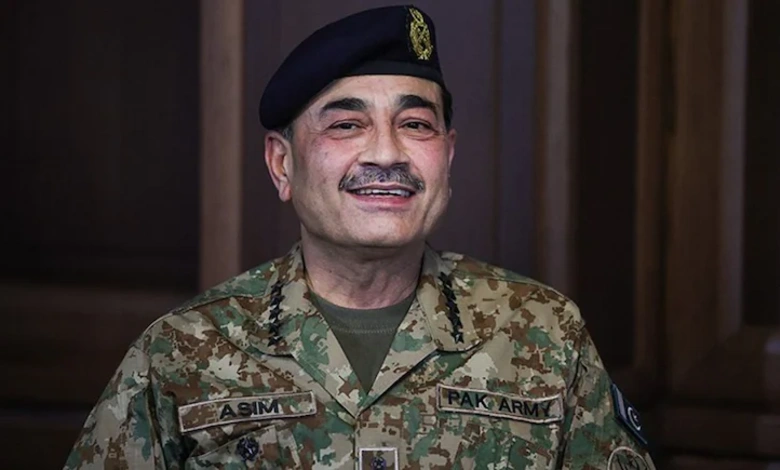
The military led by Field Marshal Asim Munir appears to be tightening its hold on one of Pakistan’s most volatile provinces, even as the UNDP 2026 Global Multidimensional Poverty Index (MPI) shows Pakistan ranking poorly. On Sunday, the federal government imposed a state of emergency under Article 232 and governor’s rule under Article 234 in Khyber Pakhtunkhwa (KP), one of the most strife-ridden and poorest parts of the country.
The centre suspended the provincial government led by Chief Minister Sohail Afridi of the opposition Pakistan Tehreek-e-Insaf (PTI). President Asif Ali Zardari signed the order, citing an “unprecedented level of violent intensity of terrorist attacks” and a breakdown of constitutional machinery. The emergency was imposed on the advice of Prime Minister Shehbaz Sharif and the federal cabinet. It also cited the provincial government’s alleged “deliberate disengagement” from counter-terrorism efforts against the Tehreek-e-Taliban Pakistan.
What the emergency means on the ground in KP
Provincial Governor Faisal Karim Kundi has assumed the province’s executive functions, and an 11-member technocratic advisory council has been formed. Under Article 245, the Army has been ordered to assist civil authorities, and the governor can determine force levels in consultation with General Headquarters.
To restore law and order, the central government has ordered an Area Development Secretariat in the districts of Dera Ismail Khan, Tank, Lakki Marwat, Bannu, Bajaur, Mohmand, Khyber, Kurram, Orakzai, North Waziristan and South Waziristan (Upper and Lower).
Role attributed to Asim Munir
Reports said the emergency proclamations were allegedly devised by Asim Munir, who is the Chief of Army Staff and Chief of Defence Forces. In recent months, he has consolidated authority through the 27th Constitutional Amendment and the Defence Forces of Pakistan Act 2026. Both laws grant him operational command over all three services and extend his tenure.
Pakistan’s standing on the UNDP poverty index
One aspect of the emergency order was to “ensure development” in the region. The measures come amid new poverty figures for Pakistan. The 2026 Global MPI, released on Monday by the UNDP and the Oxford Poverty and Human Development Initiative (OPHI), put Pakistan’s multidimensional poverty incidence at 38.3 percent. That is about 96.32 million people when applied to 2024 population estimates.
Nationally, the MPI value stands at 0.198, with a deprivation intensity of 51.7 percent among the poor. The share of people deprived in at least half of the weighted indicators was 21.5 percent. Education contributes 41.3 percent of overall deprivation, followed by living standards at 31.1 percent and health at 27.6 percent.
Also Read:Houthi Missile Intercepted Over Riyadh as Attacks Continue for Third Consecutive Day
Pakistan’s figure is more than twice that of India at 16.4 percent (MPI 0.069) and Bangladesh at 14.9 percent (MPI 0.067).
Khyber Pakhtunkhwa among the worst-hit provinces
MPI data from the 2017-18 survey, the underlying statistic for the UNDP’s 2026 index, show a headcount of 50.7 percent and an MPI value of 0.258 for KP. Both are well above the national figures. The former Federally Administered Tribal Areas recorded 71.5 percent and 0.383.
The emergency places under federal and military control the districts where poverty is high. These areas see acute deprivation in schooling, sanitation and housing, and the volatile security situation worsens conditions for residents. The military has now assumed responsibility for both security and development in regions whose multidimensional poverty indicators remain among the country’s worst.
-

-

-

-