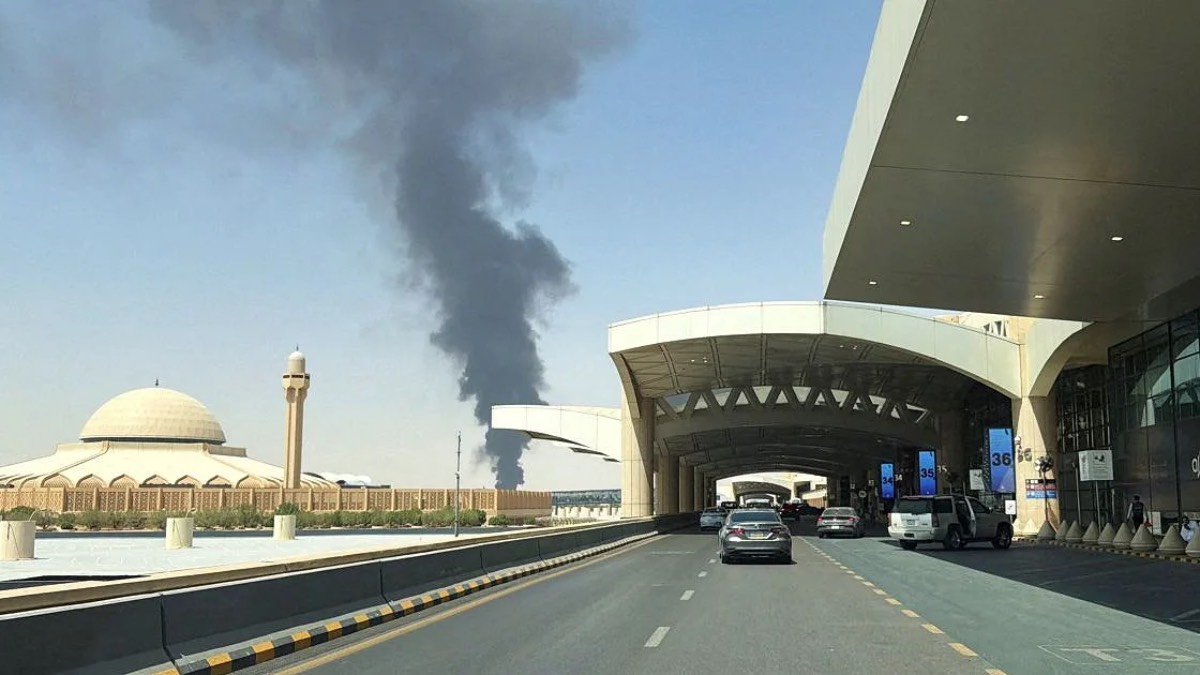
Saudi-led coalition forces intercepted a ballistic missile launched by the Houthis towards the capital Riyadh, marking the third consecutive day of strikes on the city.
Coalition spokesperson Turki Al-Maliki stated that one ballistic missile was fired at Riyadh and two others towards Khamis Mushait in the southwest. All three were intercepted and destroyed.
Residents of Riyadh reported several powerful explosions on Monday night shortly after receiving text alerts warning of an aerial threat.
The Houthis, who control Yemen’s most populous areas including the capital Sanaa, said their target in Riyadh was King Khalid International Airport. Houthi military spokesman Yahya Saree also reported that a drone had been sent towards a military airbase at Khamis Mushait near the Yemeni border. He warned international airlines and travellers against operating flights to Saudi airports, with the exception of the holy cities of Mecca and Medina, describing the facilities as unsafe.
King Khalid International Airport remains closed following a Houthi attack on Saturday that killed at least 13 people and wounded more than 300. A further strike on Sunday killed one person and wounded 11. Saudi authorities said the airport would stay shut until Saturday, and airlines have cancelled flights. The Houthis have also targeted Saudi oil facilities.
The attacks occur amid the ongoing conflict in Yemen, where the Houthis are fighting forces aligned with the internationally recognised government. The Saudi-led coalition has conducted an air campaign against the Houthis and supported government ground forces. The fighting has intensified against a backdrop of wider regional tensions.
Speaking at an energy conference in Riyadh, Saudi Energy Minister Prince Abdulaziz bin Salman Al Saud said the recent airport attacks had tested the kingdom’s resilience. He described the events of recent weeks as serious and stated that the response must be equally serious, while emphasising that Vision 2030 and investment must continue.
Saudi authorities have opened an investigation into why air defences failed to stop the earlier barrage. An initial inquiry indicated that the Houthis first launched several drones to clear a path for a mix of cruise and ballistic missiles that reached the airport. The Houthis possess ballistic missiles with warheads that can change direction in flight, posing challenges to existing interceptor systems. Investigators are also examining why there was no earlier warning for missiles and drones that travelled more than 1,000 kilometres to reach Riyadh.
US President Donald Trump criticised the Houthis, describing them as “misbehaving very badly,” but gave no indication of American intervention. A Houthi official warned that any US involvement would prompt a swift and painful response targeting American interests in the region, and advised workers at Saudi oil facilities and airports to stay away, calling the sites legitimate targets.
The attacks have placed pressure on events scheduled in Riyadh this month, including a major investment conference and an energy congress. Several airlines have adjusted operations: Etihad Airways cancelled all flights to and from Riyadh until next week and suspended services to Dammam and Jeddah; Gulf Air cancelled Riyadh flights until Saturday; and Delta delayed the launch of its Atlanta-to-Riyadh service, originally planned for 23 October.
-

-

-

-