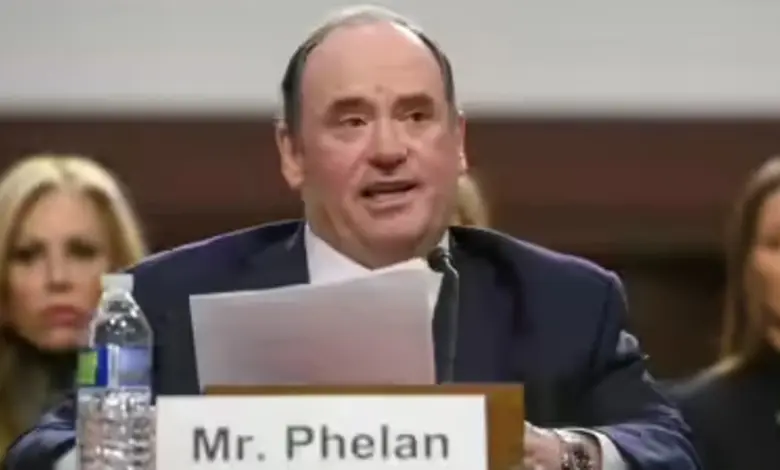
The United States Department of Defense is witnessing continued leadership turbulence, with Navy Secretary John Phelan stepping down unexpectedly during a period of escalating tensions linked to the ongoing conflict with Iran. The Pentagon confirmed his immediate departure on Wednesday, though it did not provide a specific explanation for the abrupt move.
Phelan’s exit marks a significant development, as he becomes the first military service chief to leave office during President Donald Trump’s second term. His resignation comes at a critical juncture, with US naval forces actively engaged in enforcing a blockade targeting Iranian-linked maritime activity, particularly in strategically sensitive waterways such as the Strait of Hormuz.
The leadership change is part of a broader reshuffling within the Pentagon, where several senior military officials have been removed in recent weeks. Defence Secretary Pete Hegseth has overseen multiple high-profile dismissals, including top-ranking officers from different branches of the armed forces. This pattern of changes underscores a wider effort to reorganize military leadership during a time of heightened geopolitical strain.
ALSO READ : Trump Extends Ceasefire as Iran Seizes Ships
Following Phelan’s departure, Undersecretary Hung Cao has been appointed as the acting Navy Secretary. Cao, a former Navy combat officer with extensive service experience, will temporarily take charge amid the ongoing crisis. His appointment ensures continuity in leadership as the Navy continues its operations in the region.
The timing of Phelan’s resignation has drawn attention, given the intensifying military activity in the Middle East. The United States has maintained a strong naval presence in key maritime corridors, while also facing mounting pressure to expand its fleet capabilities in response to both regional tensions and global strategic competition.
Overall, the sudden leadership change highlights ongoing instability within the Pentagon at a crucial moment. As the US navigates complex military and diplomatic challenges, the reshuffle reflects both internal adjustments and the broader demands of managing an active international conflict.
-

-

-

-